
Unbreakable Spirit: G-STEEL GST-B1000 Opens New Chapter for G-Shock
Editorial
Unbreakable Spirit: G-STEEL GST-B1000 Opens New Chapter for G-Shock

The sleek new G-STEEL GST-B1000 is the latest step in the evolution of a watch like no other. The G-Shock was conceived in the early 1980s by a young Casio engineer obsessed by durability. The results changed the concept of how durable a watch could be. The G-Shock has since developed into a whole range of shapes and sizes with a full range of modern functionality, all built around a core of ruggedness.
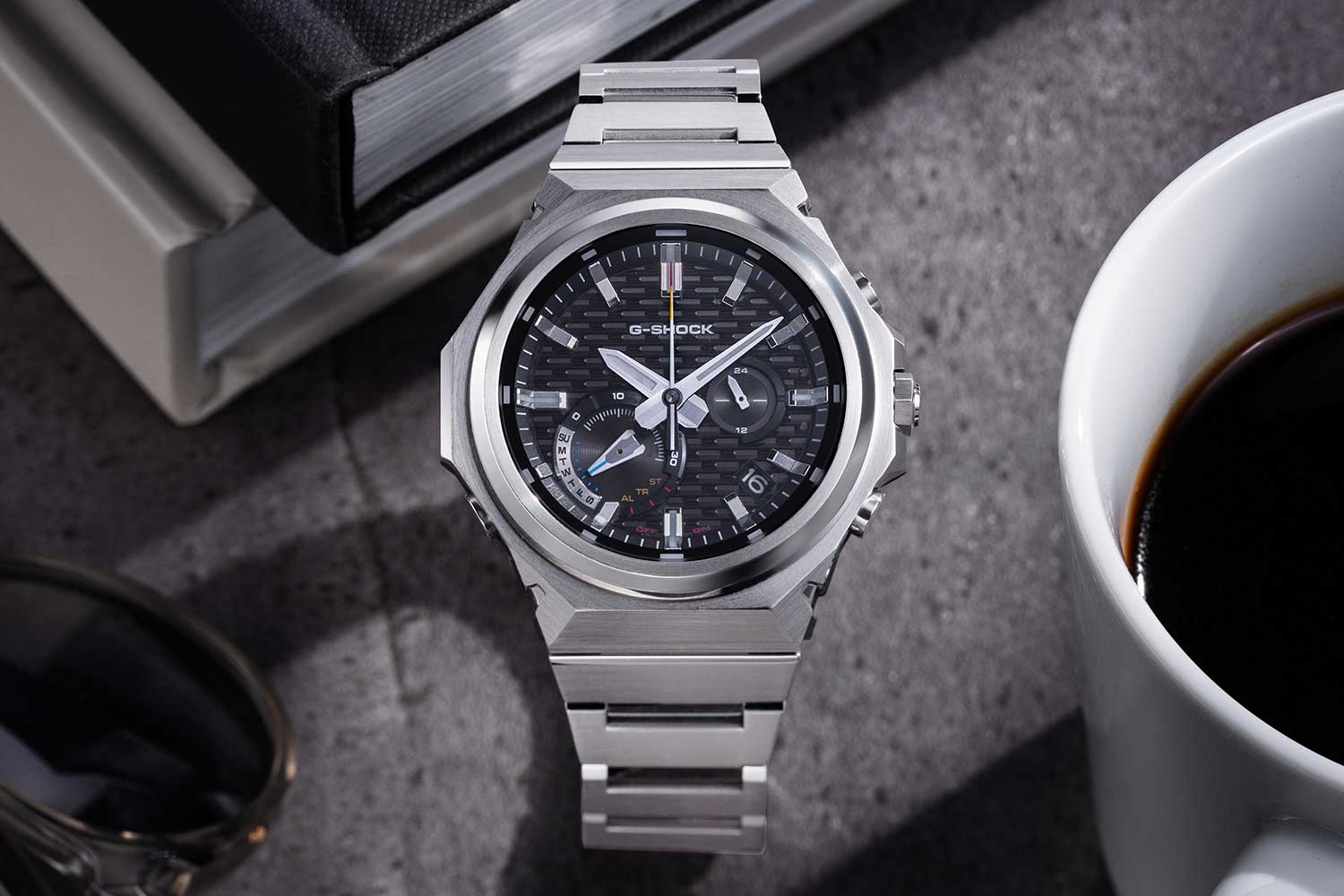
G-SHOCK G-STEEL GST-B1000, Ref. GST-B1000D-1A (©Revolution)
Like a lot of good things, the G-Shock came about by accident. Kikuo Ibe dropped a beloved watch and was dismayed to see it smash to pieces on the floor. The watch was not expensive, but it had belonged to his father, so it was of great sentimental value. Ibe’s sadness at the break was tempered by a question: what if I set out to make a watch that is indestructible?
He assembled a small team of engineers and began putting the question to the test. The group was nicknamed “Team Tough,” and they made hundreds of prototypes that they would drop from rooftops, stairwells and laboratory windows in search of a design that would live up to the demanding brief.
Legend has it that the final test came one spring morning when Ibe leaned from a third-floor window at Casio’s Hamura R&D center and let the prototype fall onto the pavement below. The watch bounced once, rolled and came to rest, still working.
With that successful drop came the creation of the G-Shock. They had discovered that by suspending the module inside a hollow structure, it could absorb shocks. The first DW-5000C, released in 1983, was proof of the “Triple 10” concept: a digital watch that could survive a 10-meter fall, withstand 10 bar (100m) of water pressure and run for 10 years. This formula was the G-Shock’s manifesto, and the name became shorthand for indestructibility.
Built to Last — and to Evolve
But the creation of a utilitarian, go-anywhere watch was just the beginning. It began as a durable tool for engineers and adventurers, but then evolved into something more. By the 1990s, G-Shock had moved from utility to culture. It was worn not only by soldiers and spacemen, but also by skaters and sneakerheads. It wasn’t just tough; it was super cool.
Over time, it became a collector’s piece. The square-faced DW-5600, successor to Ibe’s original, is now a cult design in Japan and the U.S., spawning limited editions and color-coded collaborations. Vintage G-Shocks are restored, catalogued and exhibited. For many enthusiasts, owning one isn’t about nostalgia — it’s about participating in a continuous experiment in wearable engineering.
The Casio sub-brand became a laboratory for materials innovation, experimenting with resin, carbon, titanium and steel — and gradually introduced analog-digital hybrids, solar charging, radio control and Bluetooth connectivity. The original G-Shock was about surviving physical shock, and the modern era has combined that with a technological, cultural and aesthetic freedom that has pushed far beyond the original remit.
The Rise of the G-STEEL
A big step was the introduction of the G-STEEL, first shown to customers in 2015 and going on sale the following year. The new watch was conceived as a bridge between industrial toughness and urban refinement, introducing stainless steel exteriors while retaining the G-Shock’s shock resistant core. The G-STEEL resonated with a new generation who wanted a watch tough enough to take a beating, yet stylish enough for the office or a dinner party.
The G-STEEL aesthetic echoed the architectural language of modern cities — brushed metal, exposed bolts, layered materials. It marked G-Shock’s shift from a cult object of streetwear to a legitimate player in contemporary watchmaking.
Introducing the GST-B1000
The new G-STEEL GST-B1000 takes that evolution further than ever. At first glance, it looks like a piece of industrial design sculpted for the wrist — brushed and mirror metal finishes, confident geometry and layered construction that reveals its strength rather than concealing it.
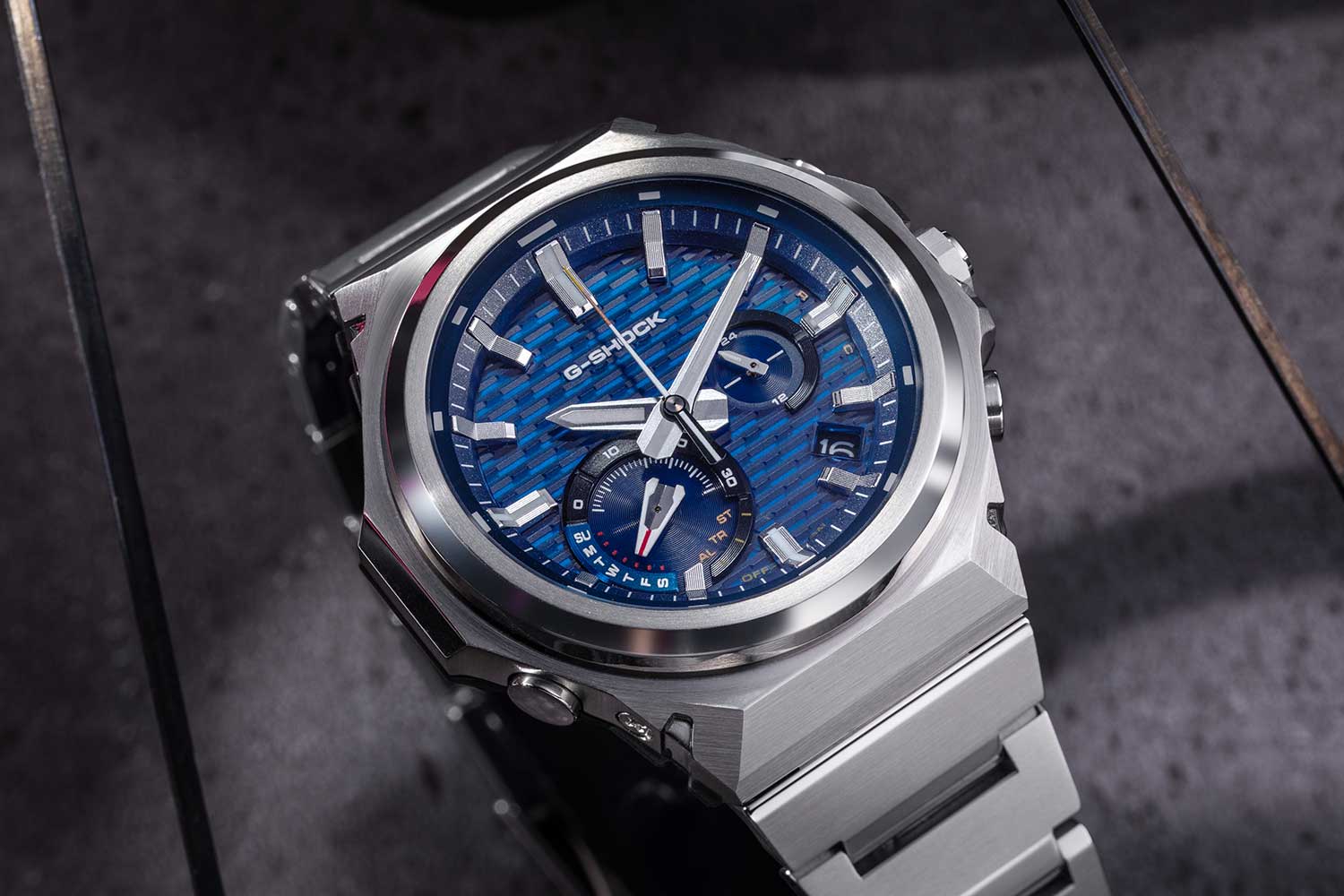
G-SHOCK G-STEEL GST-B1000, Ref. GST-B1000D-2A (©Revolution)
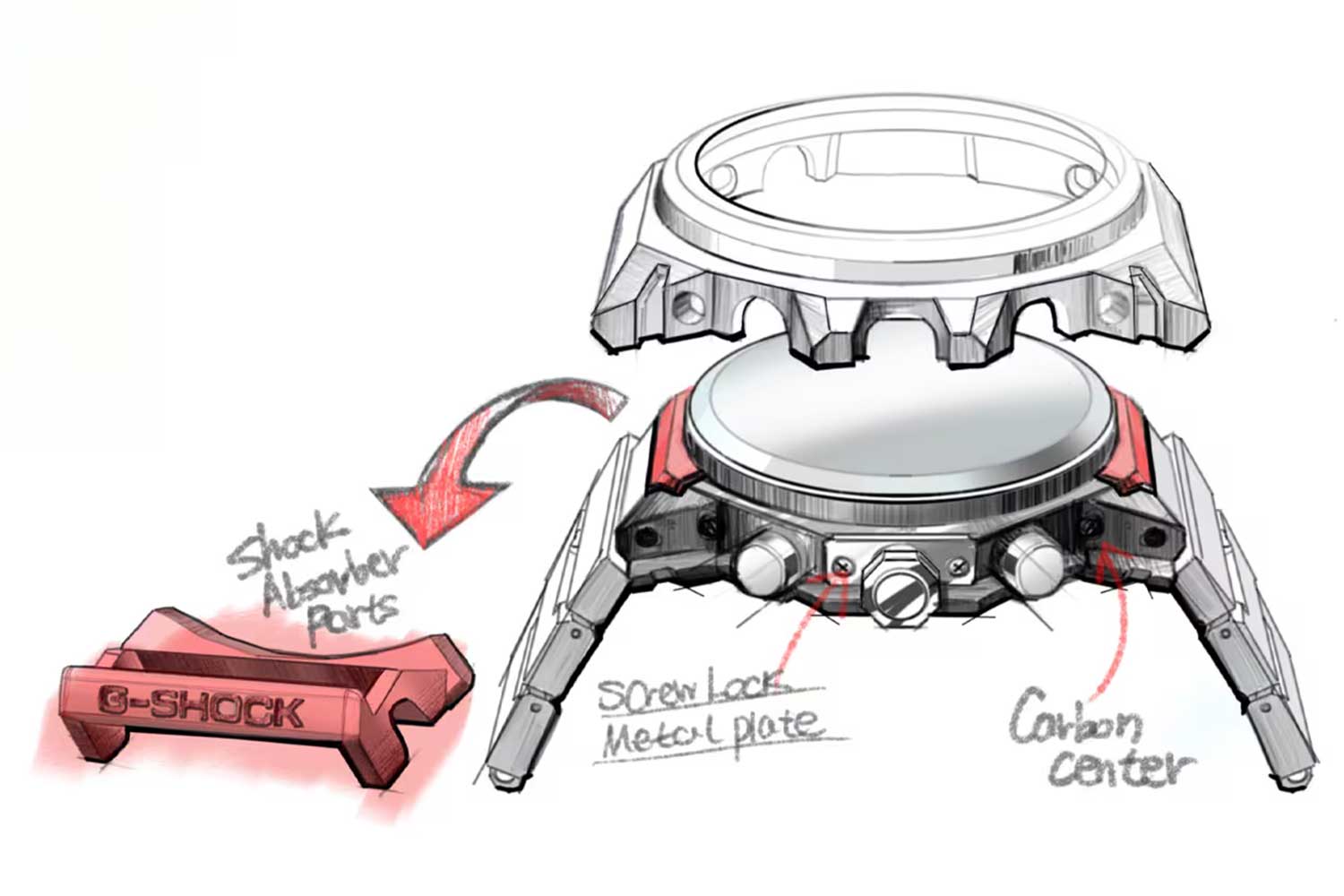
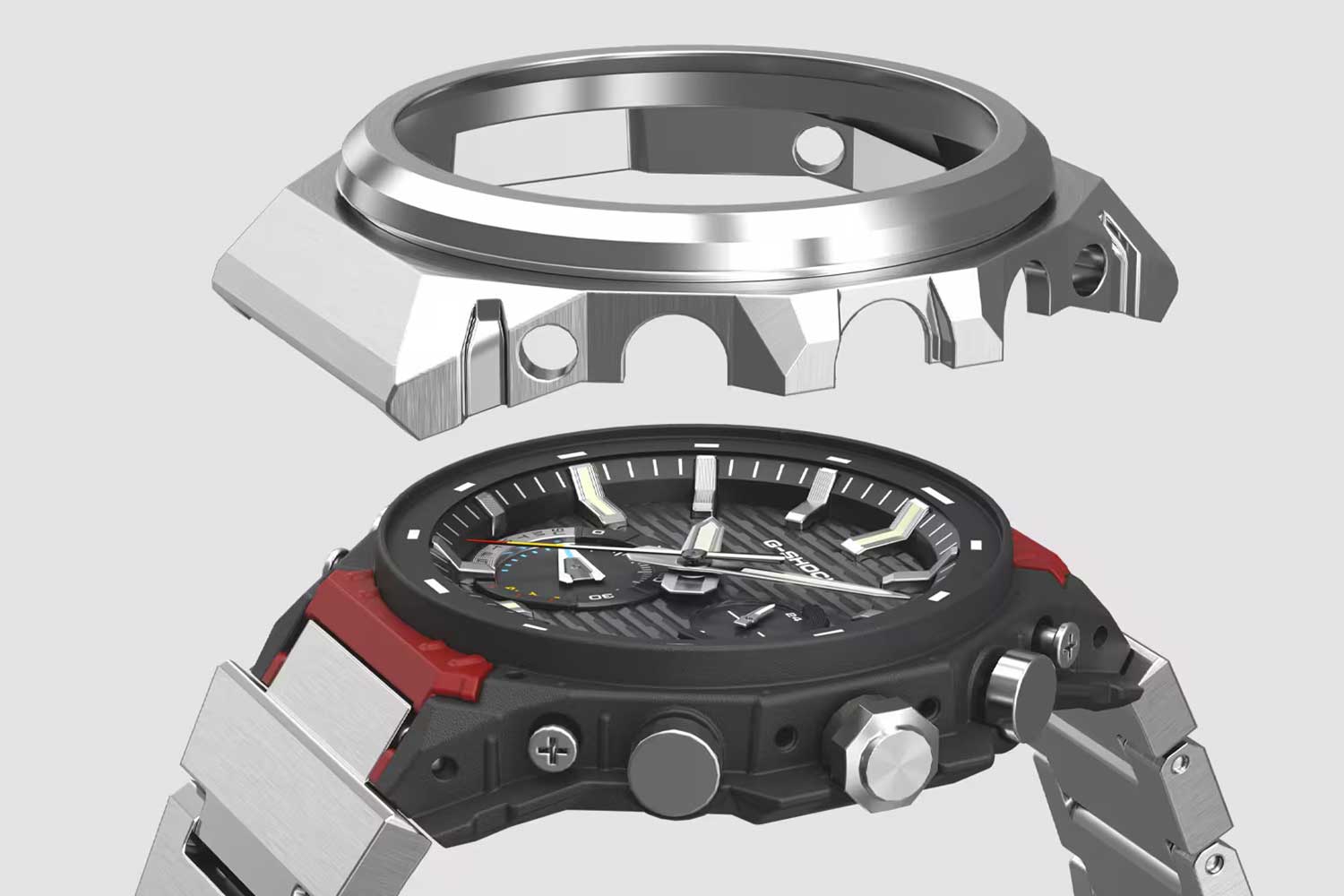
At its core lies a Carbon Core Guard Structure, surrounding the movement in a high-rigidity carbon fiber case reinforced by resin and enclosed in stainless steel. This architecture offers the shock resistance of traditional G-Shocks but at a lighter weight, improving comfort and balance.
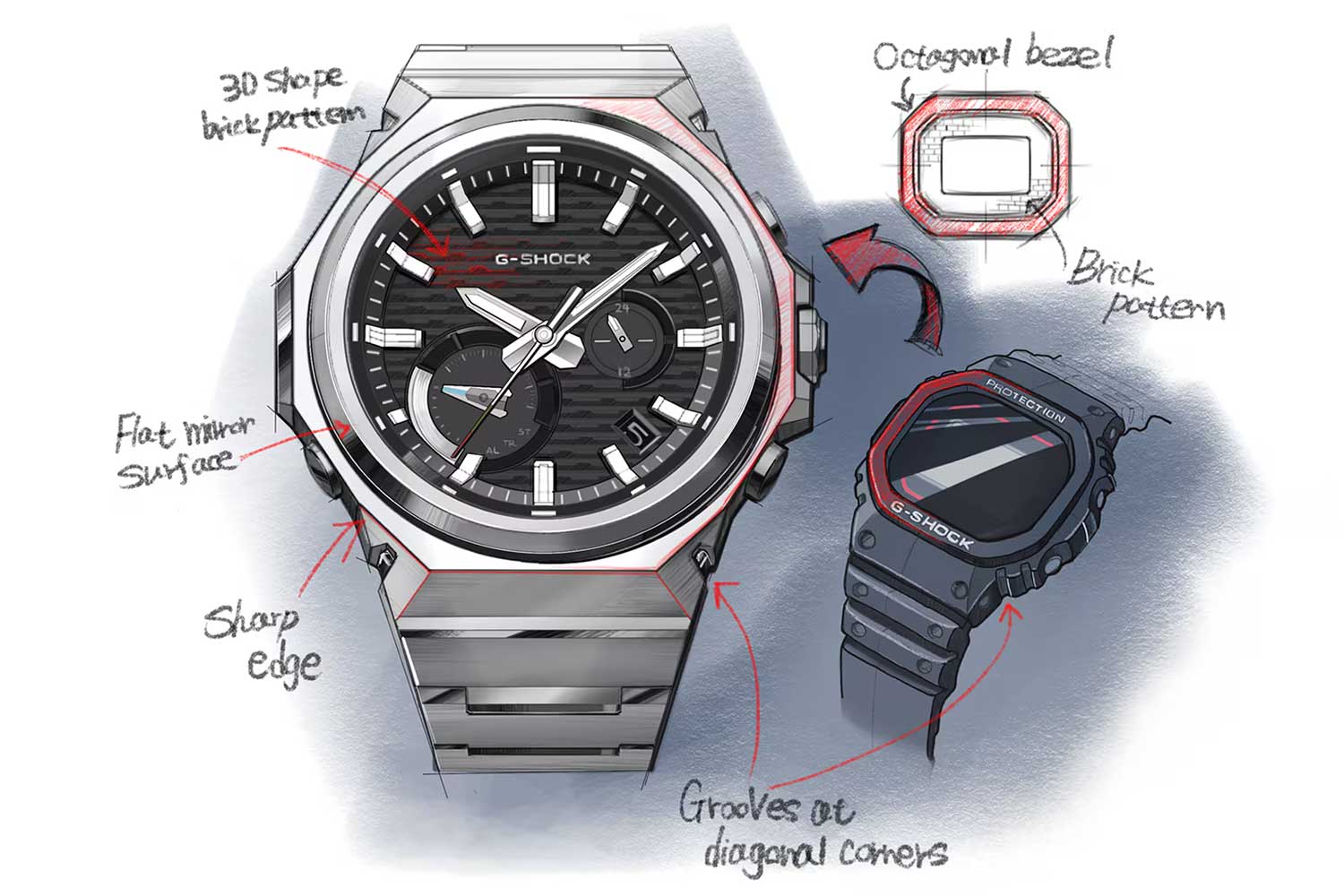
The GST-B1000 has Casio’s proprietary Tough Solar technology, drawing energy from light through its dial, and connects via Bluetooth to the Casio Watches app, which automatically adjusts time zones, manages the alarm and logs functions through a simple interface. Functions include a one-second stopwatch, countdown timer, daily alarm and battery level indicator, all operated through side button pushers. The three-dimensional dial adds depth, with a unique brick pattern reflecting the DNA of the original G-Shock, metallic indexes with vapor deposition finish and subdials that echo dashboard instruments.
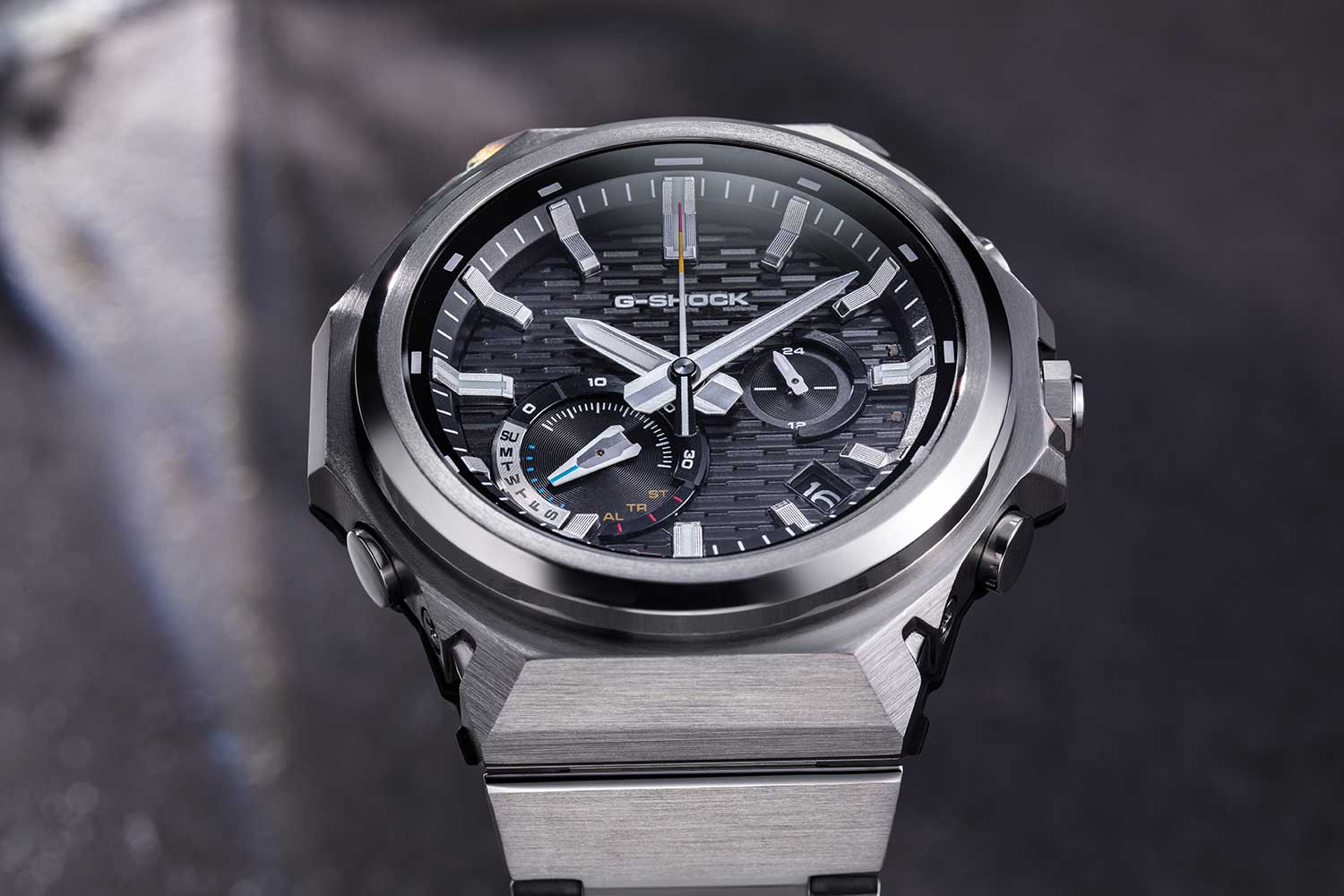
G-SHOCK G-STEEL GST-B1000, Ref. GST-B1000D-1A (©Revolution)
The GST-B1000 comes in three variants: a black, blue or green dial with stainless steel bezel, full stainless steel bracelet and buckle; all three models feature very subtle red, blue and yellow accents as an ode to the original G-Shock.
Design: Strength in Layers
The G-STEEL aesthetic has matured into something distinct from both traditional luxury watches and pure sports instruments. Its strength lies in contrast: brushed and polished steel, matte resin guards, sharp bevels and chamfered edges that catch the light like facets of a tool.
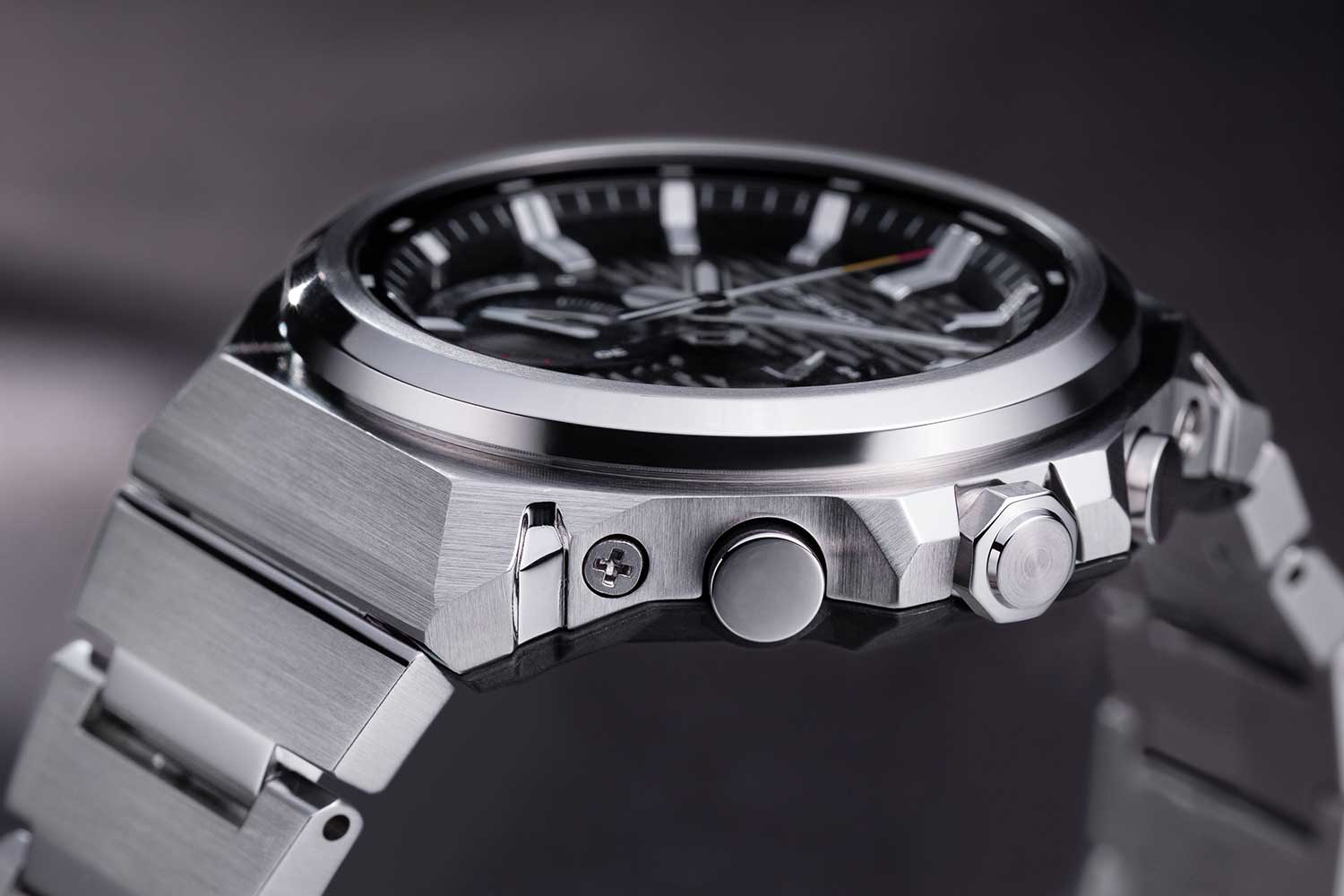
G-SHOCK G-STEEL GST-B1000, Ref. GST-B1000D-1A (©Revolution)
For the GST-B1000, Casio’s designers focused on streamlining the silhouette without diluting the DNA. The result is a watch that feels purposeful yet contemporary — the kind of piece that can fit in anywhere.
Each element serves a structural purpose. The layered bezel protects against direct shocks. The inner caseband connection structure increases impact absorption. Even the arrangement of screws is engineered to distribute force. In G-Shock design, aesthetics are never arbitrary — everything is designed with a purpose.
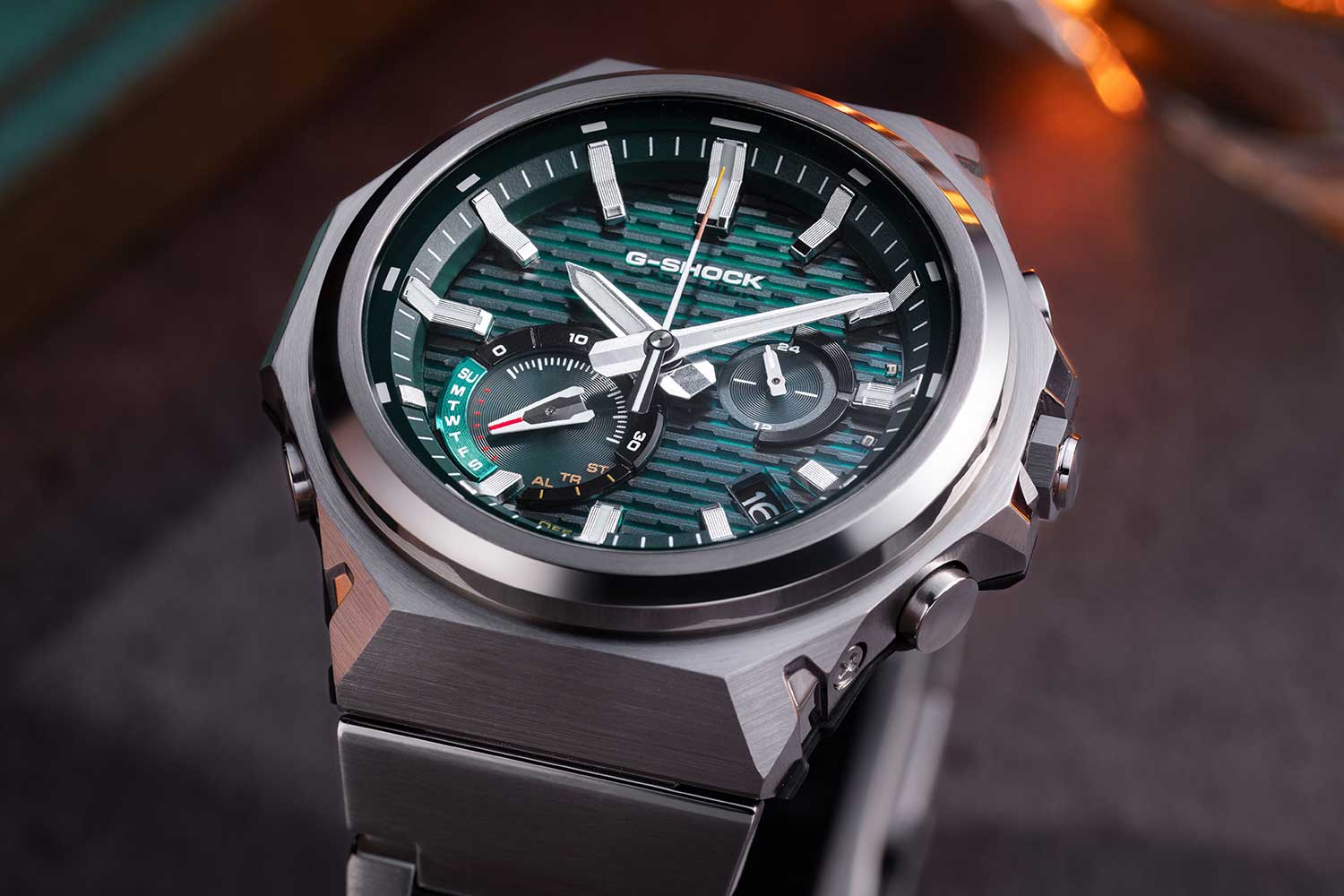
G-SHOCK G-STEEL GST-B1000, Ref. GST-B1000D-3A (©Revolution)
Engineering the Unbreakable
To understand G-Shock’s significance, it helps to remember that shock resistance in a watch is not a given and has long been a holy grail for watchmakers. Mechanical watches rely on delicate oscillating components, while digital modules are vulnerable to circuit fracture. Casio’s innovation was not to over-build but to rethink structure — to make air, resin and carbon part of the defense.
Inside the GST-B1000, the movement is held within a thin floating module, surrounded by cushioning materials that dissipate impact energy. The bezel and case form a unified shell, locking together through stainless steel screws and synthetic gaskets to resist both physical and thermal stress. A special adhesive is used for the glass to deliver a case depth of 11.6mm.
Connected but Self-Contained
In an era of smartwatches and constant notifications, G-Shock has taken a different route. Rather than turning into a digital distraction, it remains self-contained, connecting only when necessary.
The GST-B1000’s Bluetooth link to the Casio Watches app doesn’t flood you with messages; it keeps your watch accurate and your schedule in sync. Solar charging ensures independence from cables. It’s connectivity without dependency.
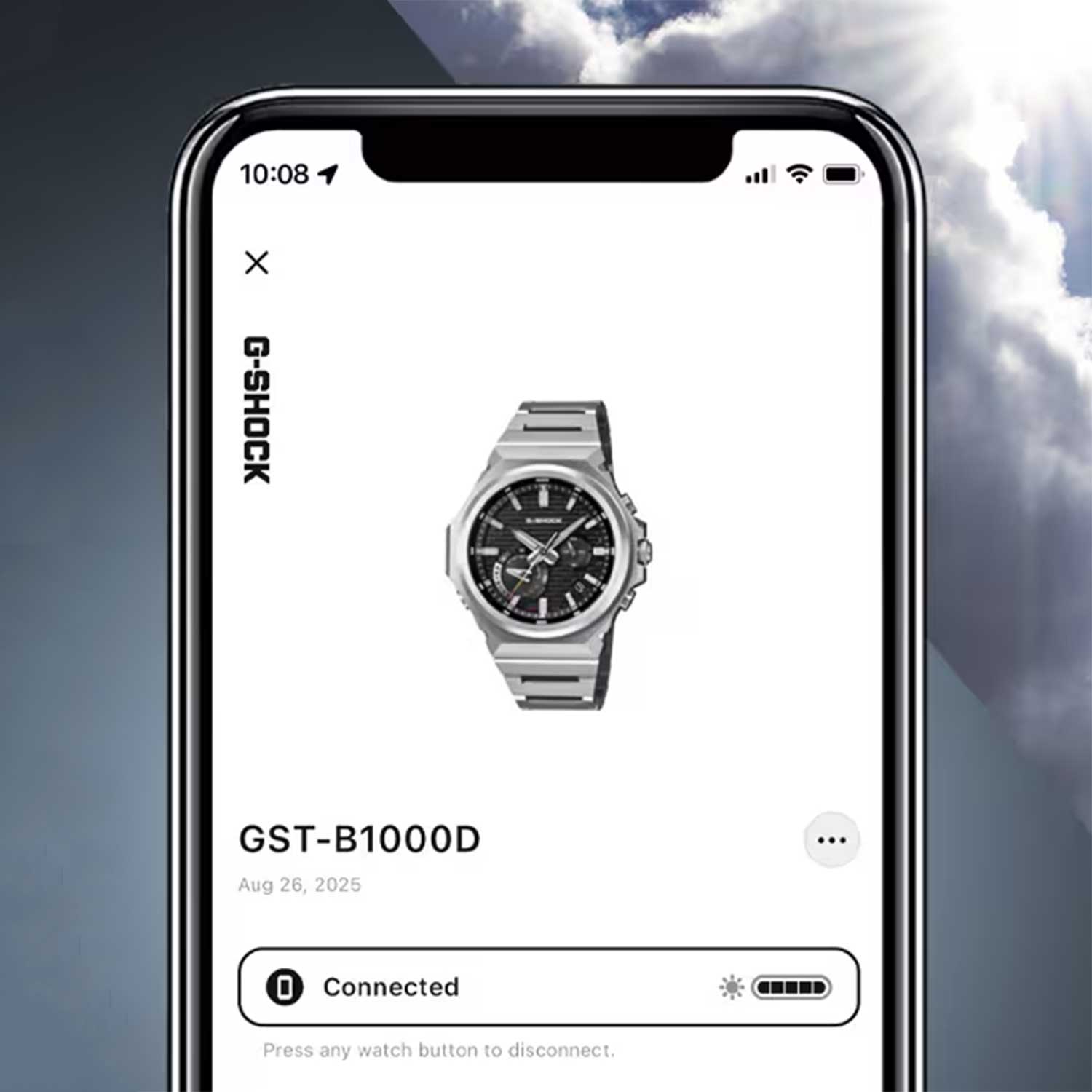
That restraint is key to its appeal. The GST-B1000 is reassuringly analog — you can feel the click of the smart-access crown, the solid engagement of buttons — but it’s quietly intelligent underneath. It understands that the future of toughness isn’t just physical durability, but also digital self-reliance.
A Legacy Forged in Steel
The use of stainless steel in G-Shock watches represents more than an aesthetic upgrade. Steel is the material of bridges, engines, skyscrapers — objects designed to endure. In the G-STEEL GST-B1000, steel becomes a metaphor for continuity, linking the raw resin strength of the 1980s to the premium precision of today’s connected world.
Casio’s manufacturing process blends Japanese craftsmanship known as monozukuri — the spirit of making things well — with modern automation. It’s a union of resilience and tactility rarely seen at this price point.
G-Shock’s steel story also mirrors Japan’s relationship with material perfection. The surfaces are designed not to conceal age but to wear it gracefully, developing character over years of knocks and scrapes — proof that beauty can emerge from impact.
The Future of Indestructibility
The story of G-Shock has always been about motion — from falling prototypes to the relentless push for better materials, smarter energy and lighter strength. The new GST-B1000 stands as an important point in that journey, showing how the concept of toughness continues to evolve.
Casio’s recent explorations into bio-based resins and sustainable manufacturing signal that G-Shock’s toughness is extending beyond physical durability into environmental responsibility. Indestructibility, in this new era, also means leaving the lightest possible footprint.
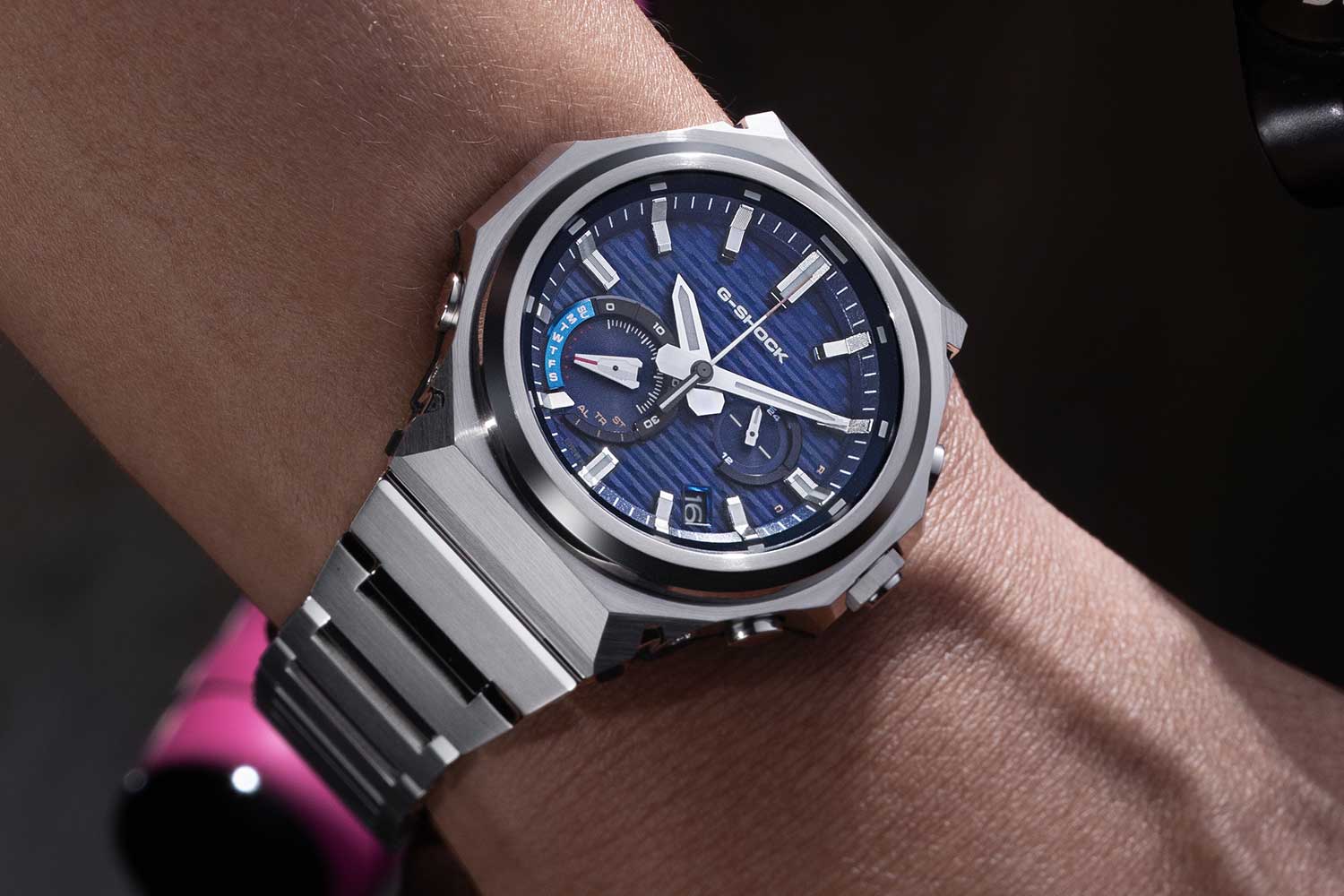
G-SHOCK G-STEEL GST-B1000, Ref. GST-B1000D-2A (©Revolution)
The Beauty of Unbreakability
The G-STEEL GST-B1000 is more than the latest in a long line of G-Shocks. It’s a statement of continuity — proof that even a brand built on rebellion can mature without losing its edge.
The new watch carries the echoes of the first prototypes hitting the ground in the early 1980s and takes it into a new era. Indestructibility, after all, isn’t about never falling; it’s about never giving up. The GST-B1000 wears that legacy with pride — robust, refined and ready for anything.
Tech Specs: G-SHOCK G-STEEL GST-B1000
References: GST-B1000D-1A (black); GST-B1000D-2A (blue); GST-B1000D-3A (green)
Movement: Tough Solar (Solar powered)
Functions: Hours, minutes, seconds, stopwatch and countdown timer, alarm, date and day display, LED light (Super Illuminator), Bluetooth connectivity, and Smartphone Link with automatic time adjustment
Case: 46.9mm × 44.2mm × 11.6mm / 118g; high-rigidity carbon fiber reinforced by bio-based resin and enclosed in stainless steel (Carbon Core Guard Structure); water resistant to 200m
Dial: Black, blue or green with unique brick pattern; metallic indexes
Strap: Solid stainless steel bracelet and buckle treated with hairline finish and mirror polish
Price: USD 440
For more details, visit gshock.casio.com
Casio G-Shock
You may also like
Editorial
The New CASIO G-SHOCK MRG-B2000KT-3A Shows the Brand at Its Artistic Best
Jan 29, 2026
Editorial
The New CASIO G-SHOCK MRG-B2000KT-3A Shows the Brand at Its Artistic Best
Jan 29, 2026
Editorial
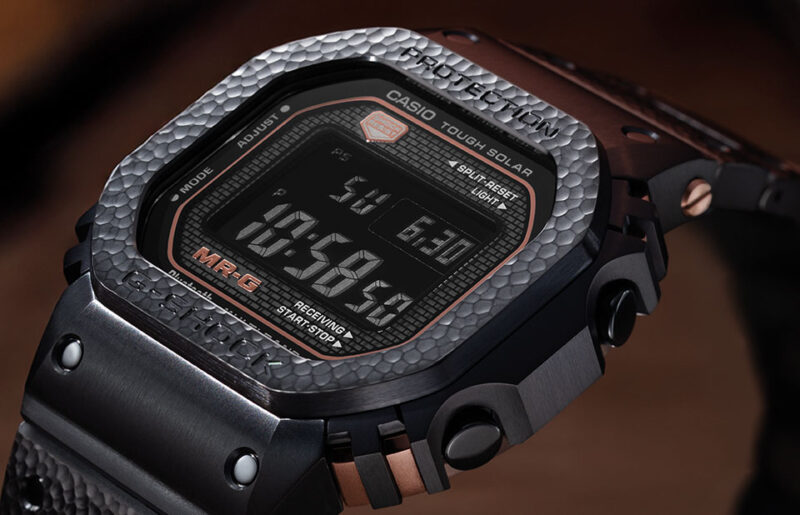
How Traditional “Tsuiki” Japanese Metalwork Shaped This G-SHOCK MRG-B5000HT
Sep 3, 2025
Editorial
How Traditional “Tsuiki” Japanese Metalwork Shaped This G-SHOCK MRG-B5000HT
Sep 3, 2025

News
Of Majesty and Reality
Dec 16, 2024
News
Of Majesty and Reality
Dec 16, 2024