
Cartier’s Tank à Guichets: A window through time
Editorial
Cartier’s Tank à Guichets: A window through time

When you’re a cultural icon of the magnitude of Cartier, your codes transcend language barriers. You certainly don’t have to be a Parisian, or even a watch connoisseur for that matter, to be able to instantly visualise the ‘Tank’ in your mind’s eye. The French luxury maison boasts a visual language so extensive and recognisable that even were you to take away its Cartier logo, most inhabitants of earth could still correctly point out the Tank in a line-up.
That’s kind of what’s happened with the newest iteration of the Tank in 2025, but it’s not just the logo that’s no where to be seen.
2025: Cartier Privé Tank à Guichets Collections
Every year, alongside its significant tidal wave release of novelties, the maison’s Cartier Privé collection focuses on a historically significant shape from its archives and reintroduces it in precious metal, low numbers, and with just enough contemporary tweaking to elicit a significant amount of hyperventilating from collectors.
Alongside some seriously impressive releases, within the Tank family, Cartier’s most famous watch in 2025 is now not only sans a logo, but also minus a dial and hands. In fact, everything has been hidden behind a brushed and hand-finished solid metal façade with just two small windows (‘guichets’ translates as ‘small windows’) that reveal the hour in one and minutes in the other.
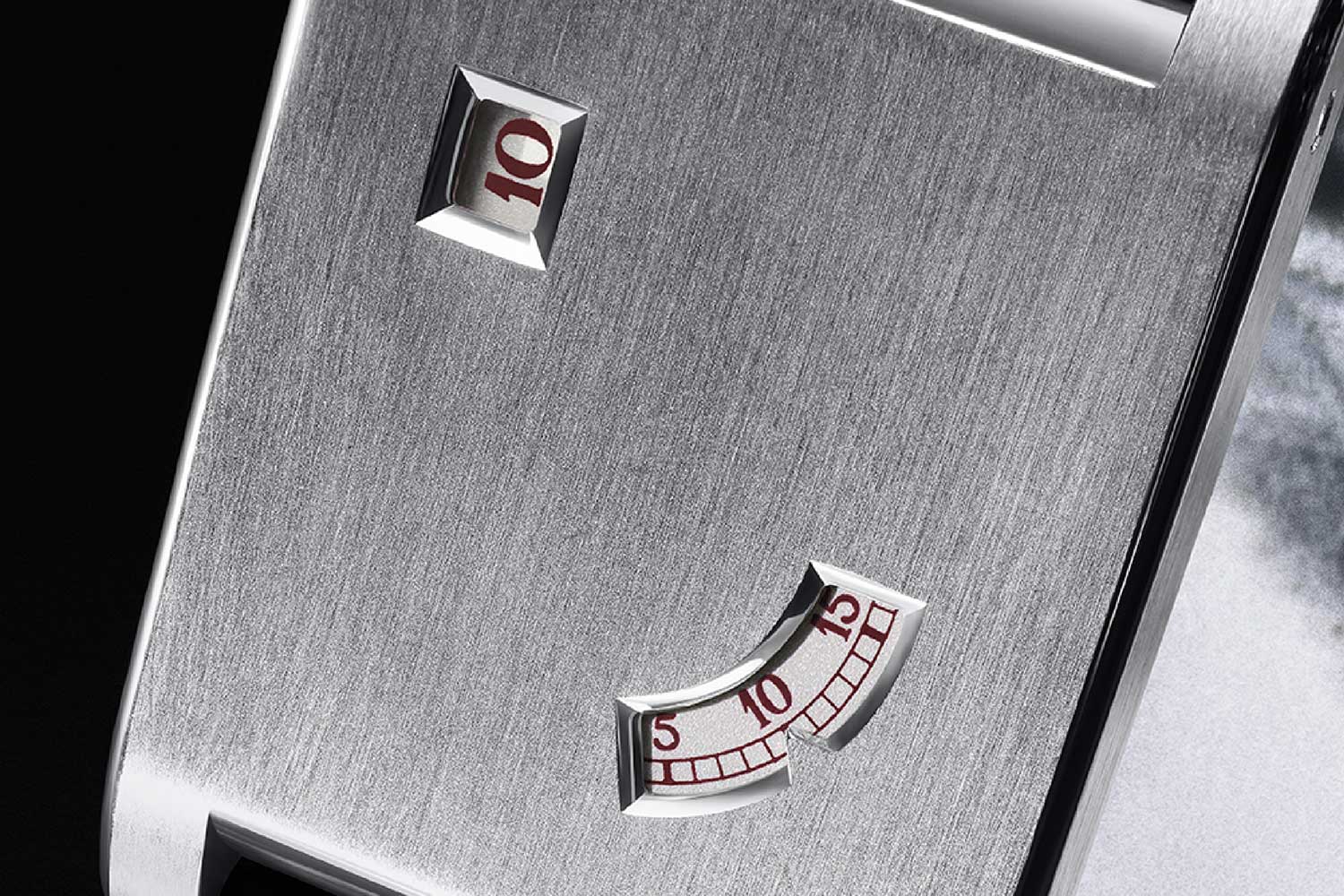
The brushed and hand-finished solid metal façade with just two ‘guichets’ that reveal the hour and minutes
When your visual codes are some of the most resonant on earth, you can afford to play around with them — although you might be surprised to learn that the design of this year’s Tank is actually pretty faithful to the original which harks back all the way to 1928. True style really is timeless, right? And amidst the open-worked dials, vivid colours and big, bold launches, the Tank à Guichets offers an enigmatic antidote — no selfies here, just a face and a couple of apertures that’s about as minimalist as it can get and still fulfil its primary function of telling the time.
Mechanical but digital
To understand the Tank à Guichets, you have to start with the Tank itself. Louis Cartier’s original 1917 design – what we now call the Tank Normale was perfectly of its time, an early 20th-century modernist design, whose functional and elegant simplicity became, as Louis Cartier himself said, a “mother idea”, i.e a foundational concept from which near endless variations have flowed over the years. “Inspired by a design dating from 1928, and made famous thanks to Jazz maestro Duke Ellington, the Tank à Guichets is one of the leading examples of that most charming anachronism — a mechanical digital watch,” wrote Revolution editor Felix Scholz about this genre of watch and it’s a charming way to look at a different way of telling time.
In 1928 the world was in a preiod of cultural and technological flux. Trains and the introduction of cars had shrunk distance, the jazz age was in full swing, and the visual language of the city was bold and graphic. Cartier’s Tank à Guichets did away with hands and was a piece of wearable industrial design — a mechanical object that spoke the same language as railway clocks and Art Deco façades. Hours and minutes were displayed on rotating discs that peeped out from two tiny “guichets,” or ticket windows, one for the jumping hour and another for the dragging minutes.
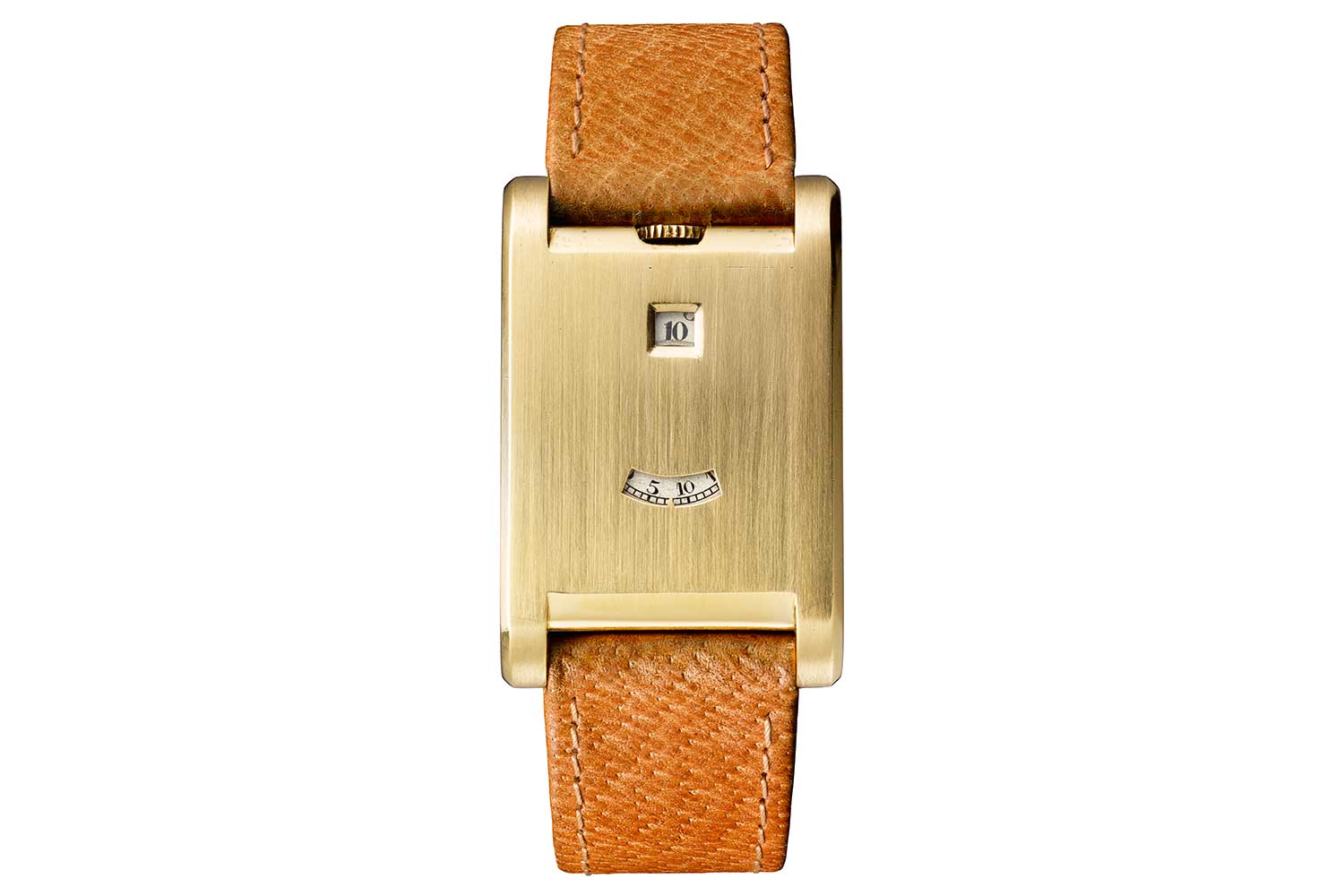
1928: Tank à Guichets
The idea of a mechanical “digital” display was not entirely new, in fact it went back several centuries. In the 17th century the Campani brothers built night clocks for Pope Alexander VII, with numerals that wandered across illuminated apertures so His Holiness could read the time in the dark without the clatter of a striking mechanism. Those early experiments with windowed displays — later refined into jump hours and wandering hours — set the stage for a whole family of guichet watches, where time is revealed rather than constantly displayed. By the late 1920s, as the world fell into the Great Depression, these stark, minimal “digital” dials also reflected the mood of austerity. No frills just numerals and metal — getting on with the job at hand.
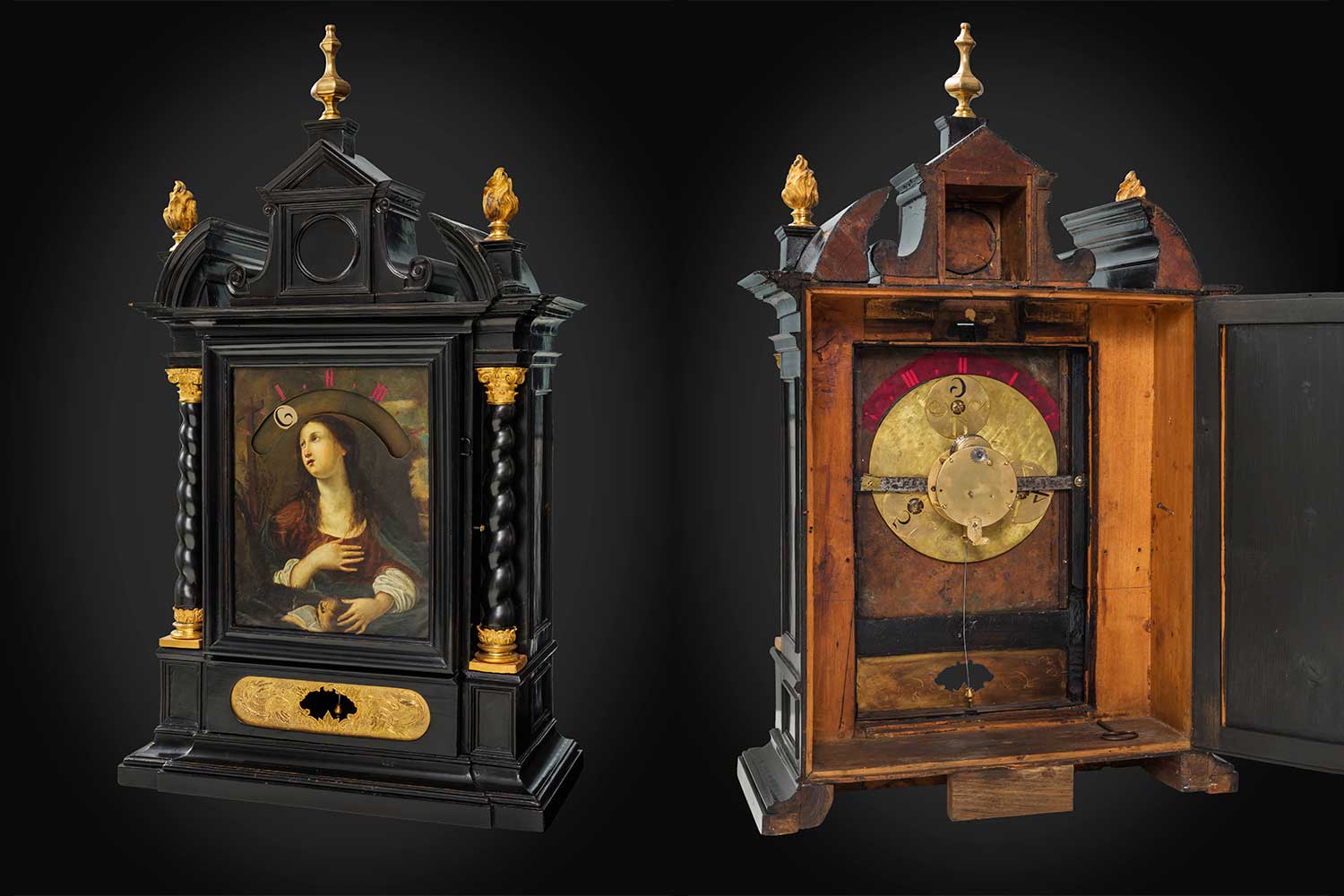
Campani bothers’ table night clock from the 17th century
Cartier’s contribution to this story swiftly became a poster child for the style. The Tank à Guichets’ architecture may have been born in the design studio on Rue de la Paix, but it found its cultural home on stage in Harlem and Paris. Photographs of Duke Ellington from the 1930s show the jazz maestro in white tie, fingers on the keys, a Tank à Guichets glinting discreetly under his cuff. It is hard to imagine a more perfect match: a watch that compresses time into pure rhythm worn by the man who did the same with music.
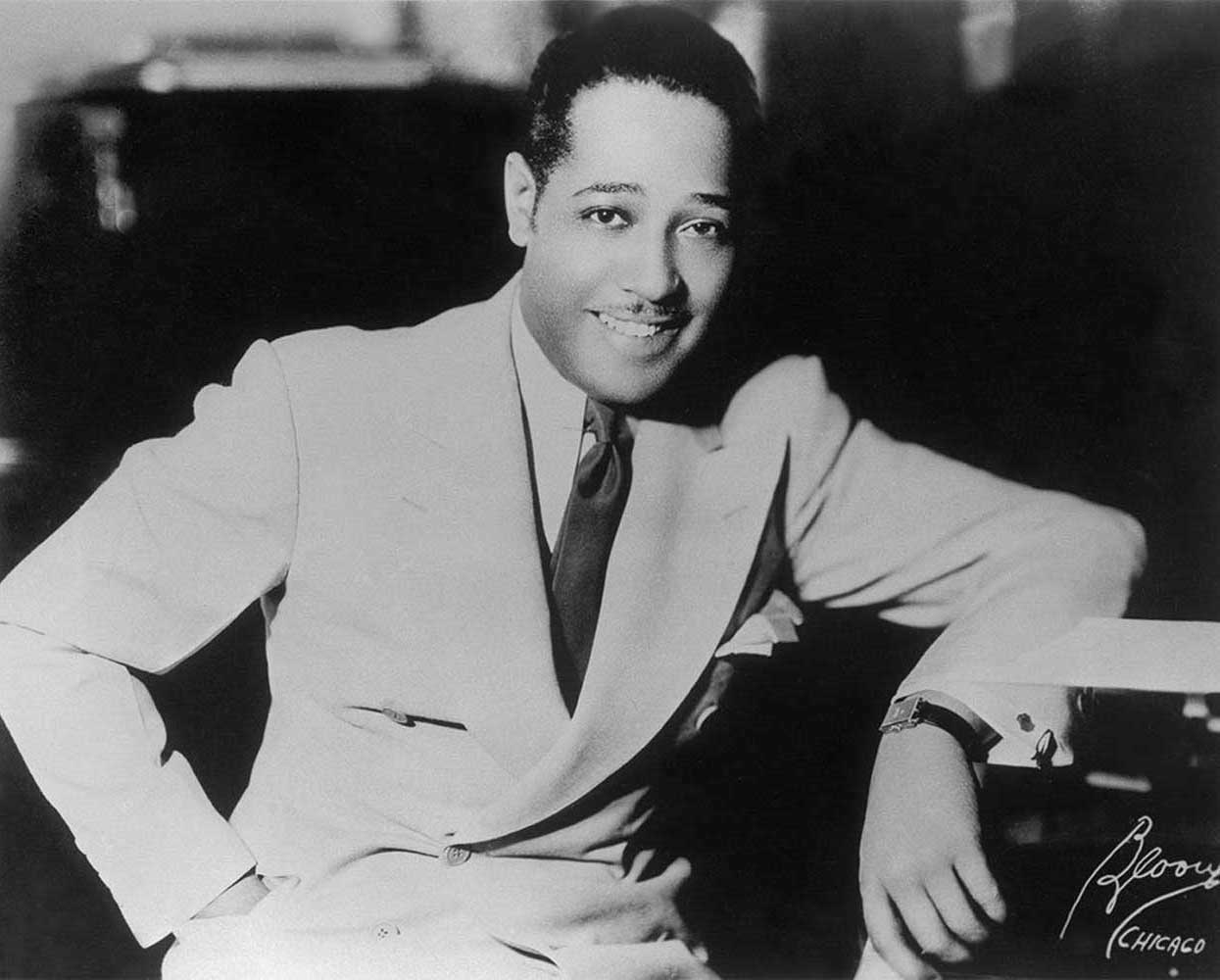
Duke Ellington wearing a Tank à Guichet watch circa 1930 (Photograph by the Collection F.Driggs/Magnum Photos)
Production of the original was tiny, and subsequent appearances have been tantalisingly rare. A platinum edition marked Cartier’s 150th anniversary in 1997; a rose gold series joined the Collection Privée Cartier Paris (CPCP) line in 2005, the maison’s concerted push to court serious mechanical collectors with classic shapes and high-grade movements.
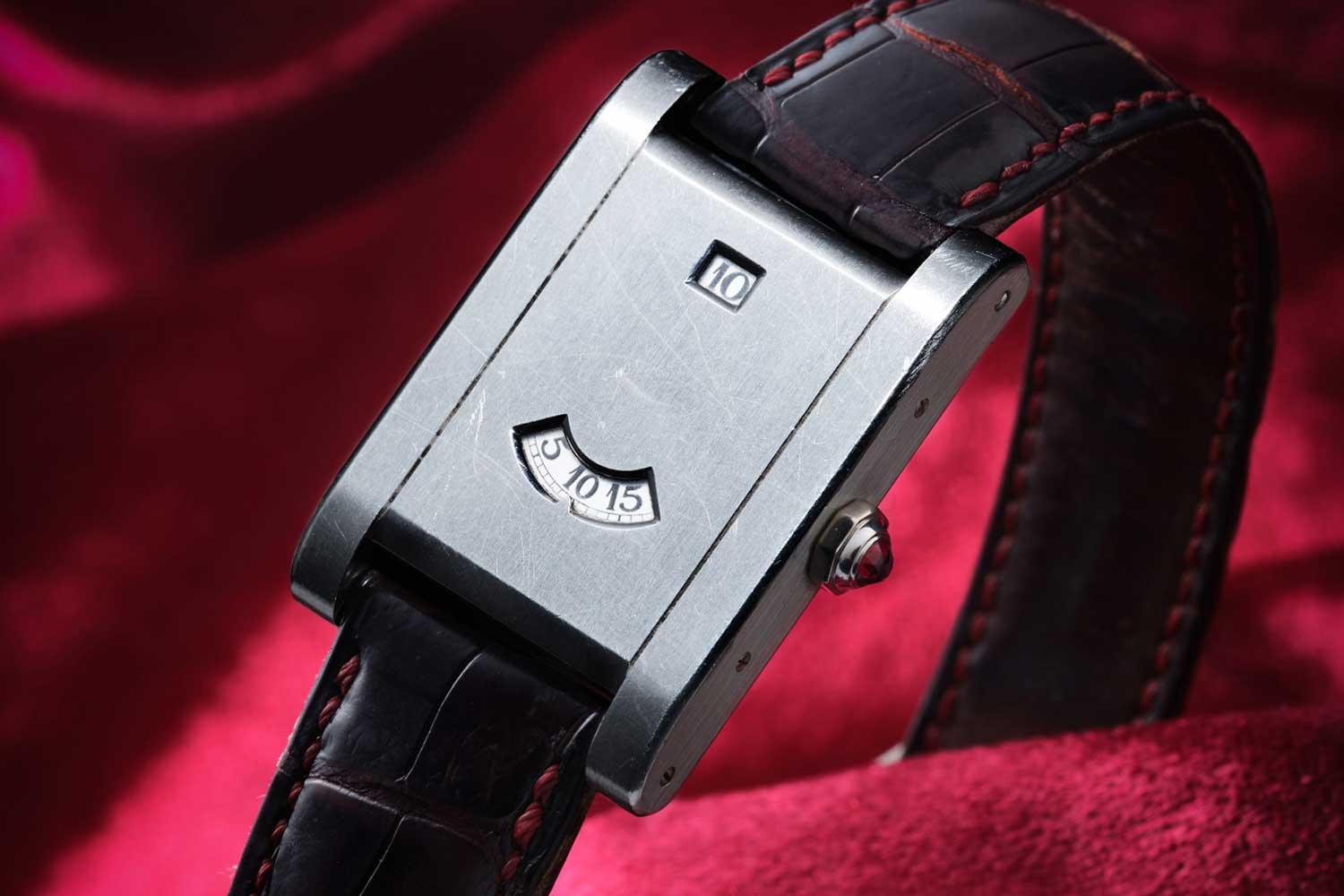
1997: Tank à Guichets (No. 80)150th Anniversary Limited Edition in platinum (Image: Sotheby’s)
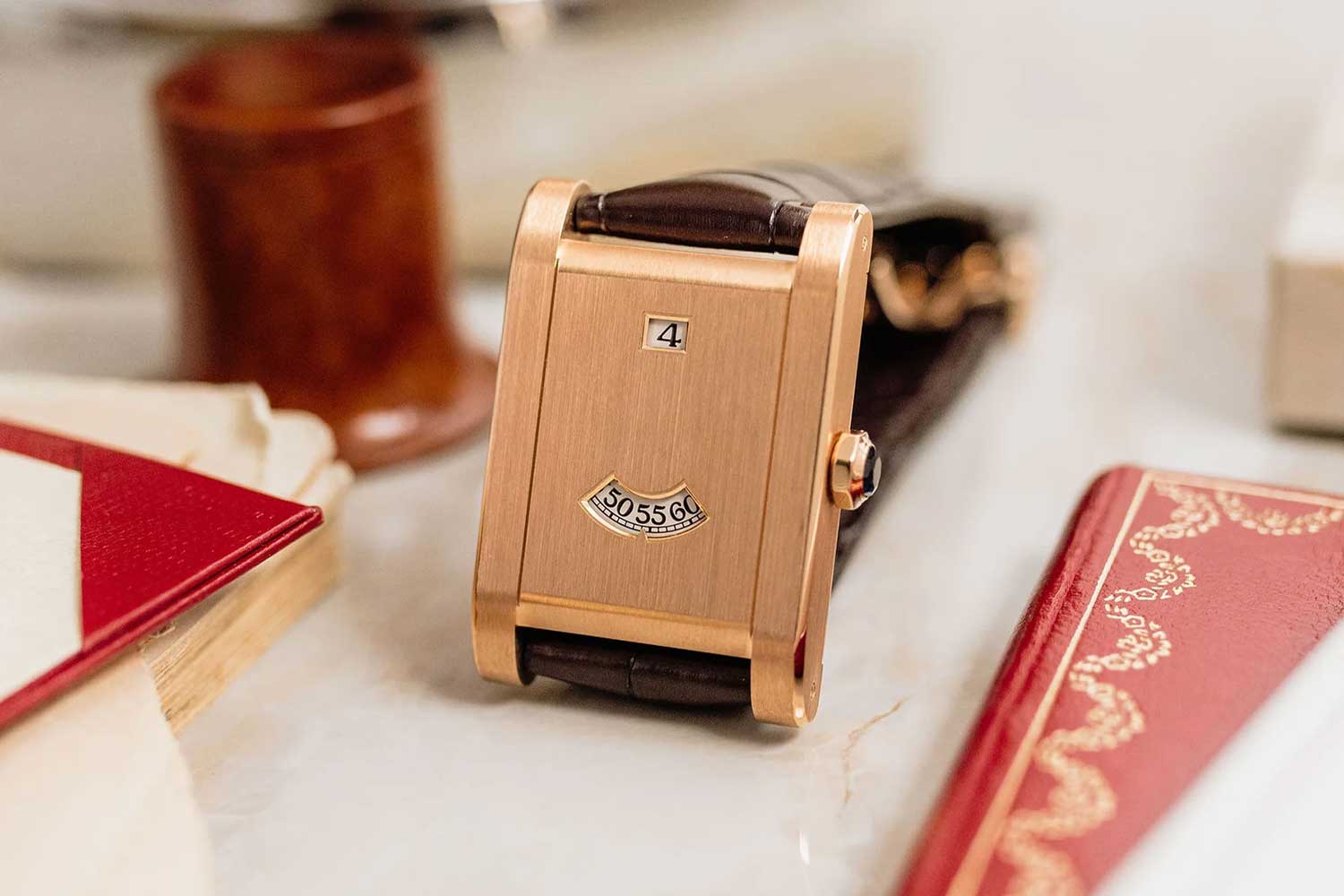
2005: Tank à Guichets CPCP in Rose gold (Image: MrWatchley)
Tank a Guichets in 2025
Cartier’s decision to bring back the Tank à Guichets for the 2025 Cartier Privé collection is more than just a return to a nostalgic masterpiece, and certainly more than a fruitful rummage through its impressive archives. It’s actually a conversation starter about what matters in contemporary watch design. This year, in a fair full of shiny novelties, Cartier’s new watch reminded everyone that radical ideas can be beautifully simple; and that complexity and mastery don’t need to be ‘in your face’. In a world of noise, the noise around Tank a Guichet has been powerful. It’s testament to its enduring design, a masterclass in rigorously elegant restraint. The case is recognisably Tank, a seamless rectangle of precious metal: 37.6mm from lug to lug, 24.8mm across, and a razor-slim 6mm thick.
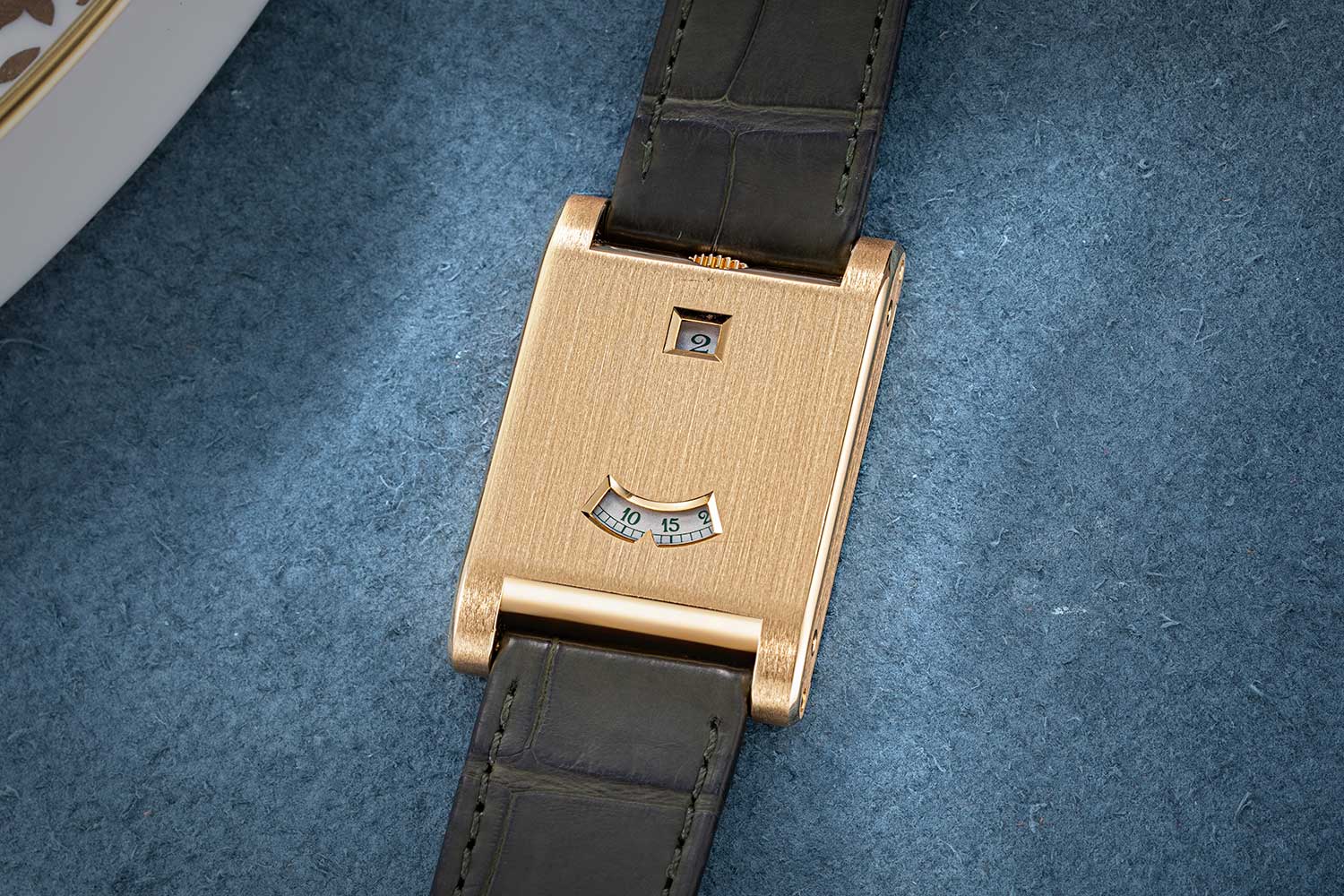
Cartier Privé Tank à Guichets (©Revolution)
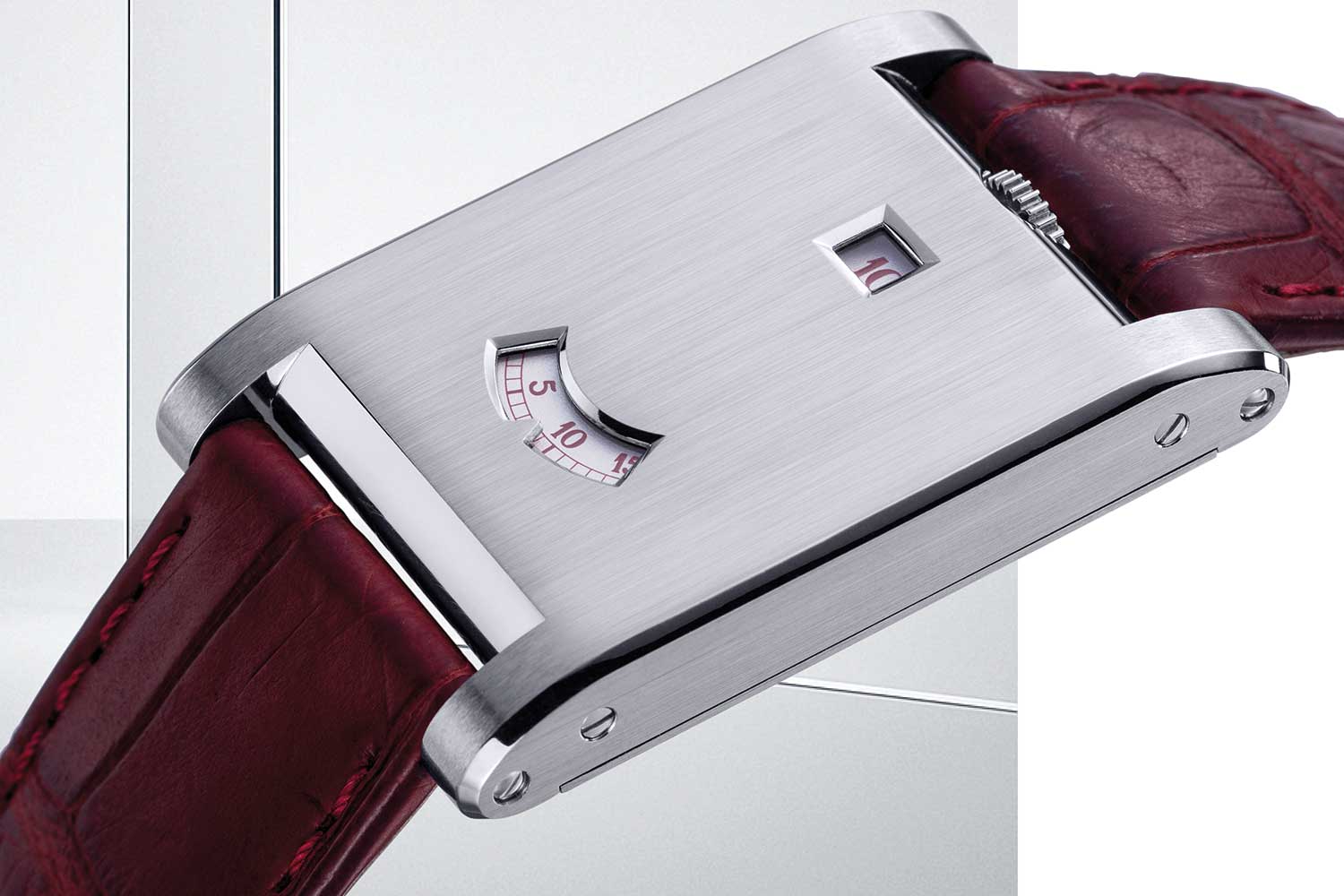
The crown — a tiny beaded cylinder with the signature Cartier cabochon – has moved from its usual position at three to sit flush at 12 o’clock, echoing certain historic pieces and keeping the silhouette even more clean with a flatter appearance. The flat face of the watch has been meticulously vertically satin-brushed, while the horizontal edges catch the light with an impeccably polished gleam. The edges of the tiny windows have been carefuly hand-polished as they are too introcate to be machined by hand.
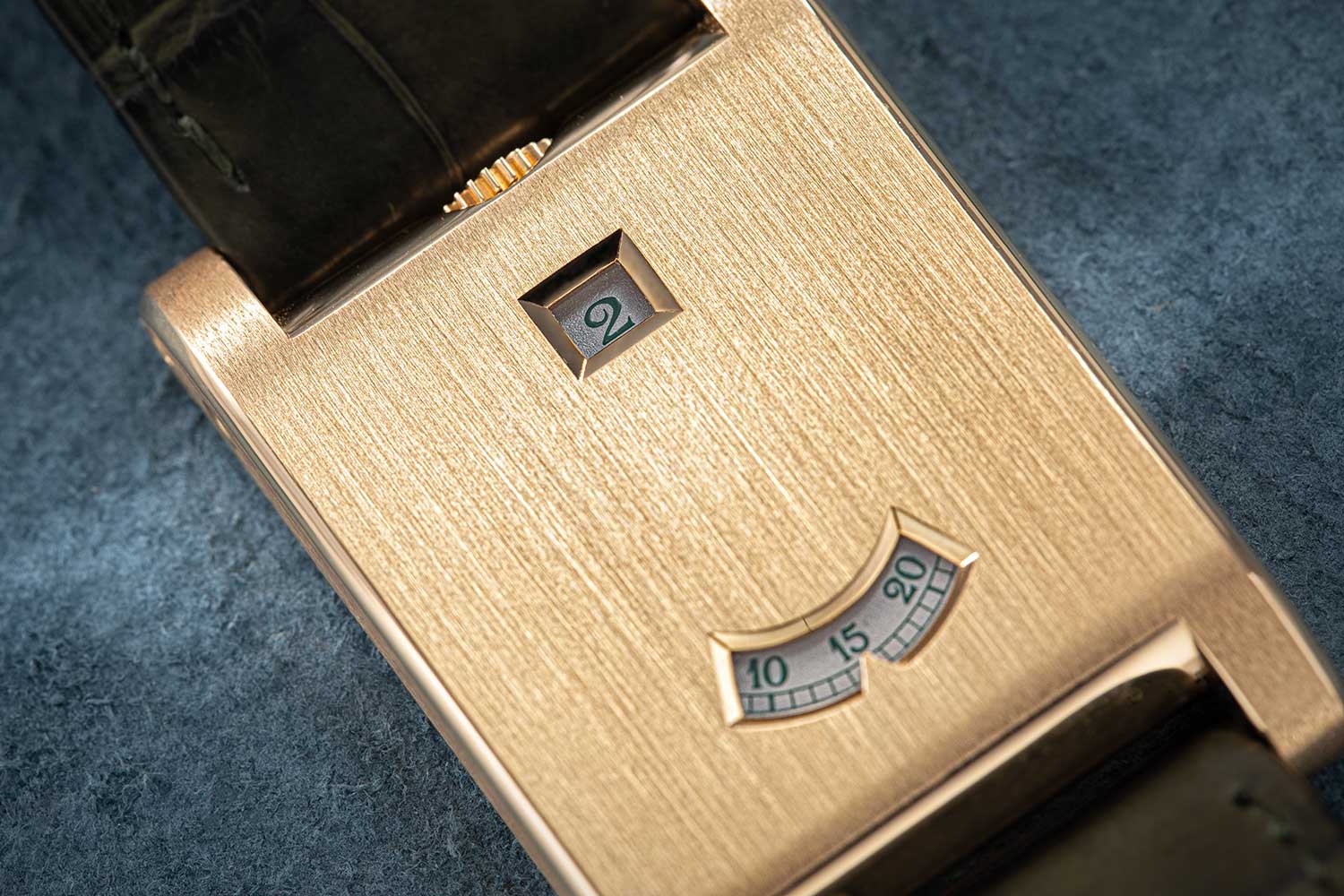
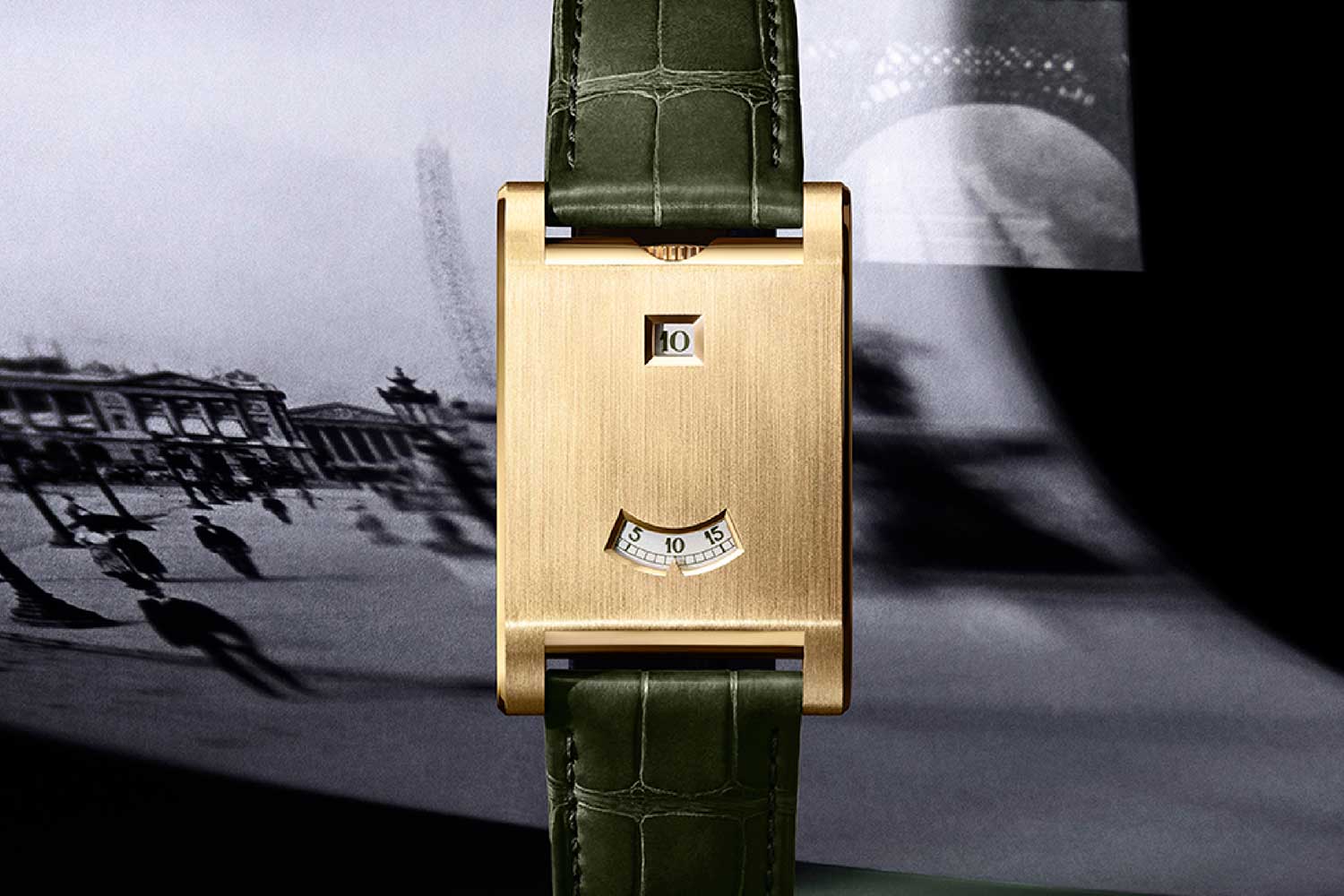
The yellow gold model for the 1928-style Cartier Privé Tank à Guichets adopts olive script against an opaline dial (©Revolution)
Beneath that metal mask beats a new, purpose-built calibre, the hand-wound 9755 MC. Developed exclusively for this reference, it drives a jumping hour and dragging minute display – the same functional combination Cartier used in 1928, but executed to contemporary standards of precision and reliability. When you advance the time, the hour disc snaps crisply from one numeral to the next, while the minute scale traces a smooth arc between five-minute graduations. It is a complication you feel as much as see, a tiny mechanical punctuation mark at the top of every hour.
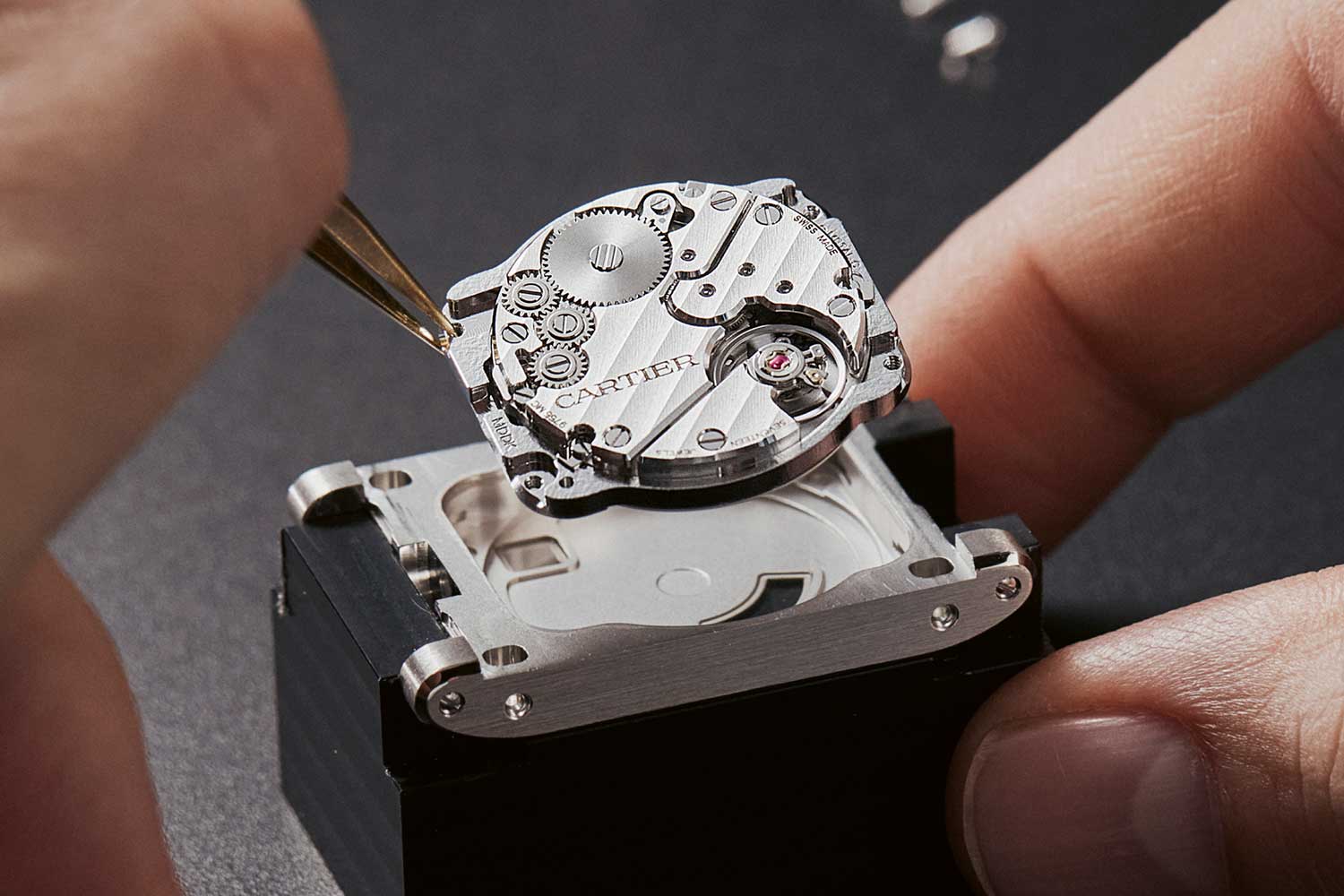
The hand-wound caliber 9755 MC
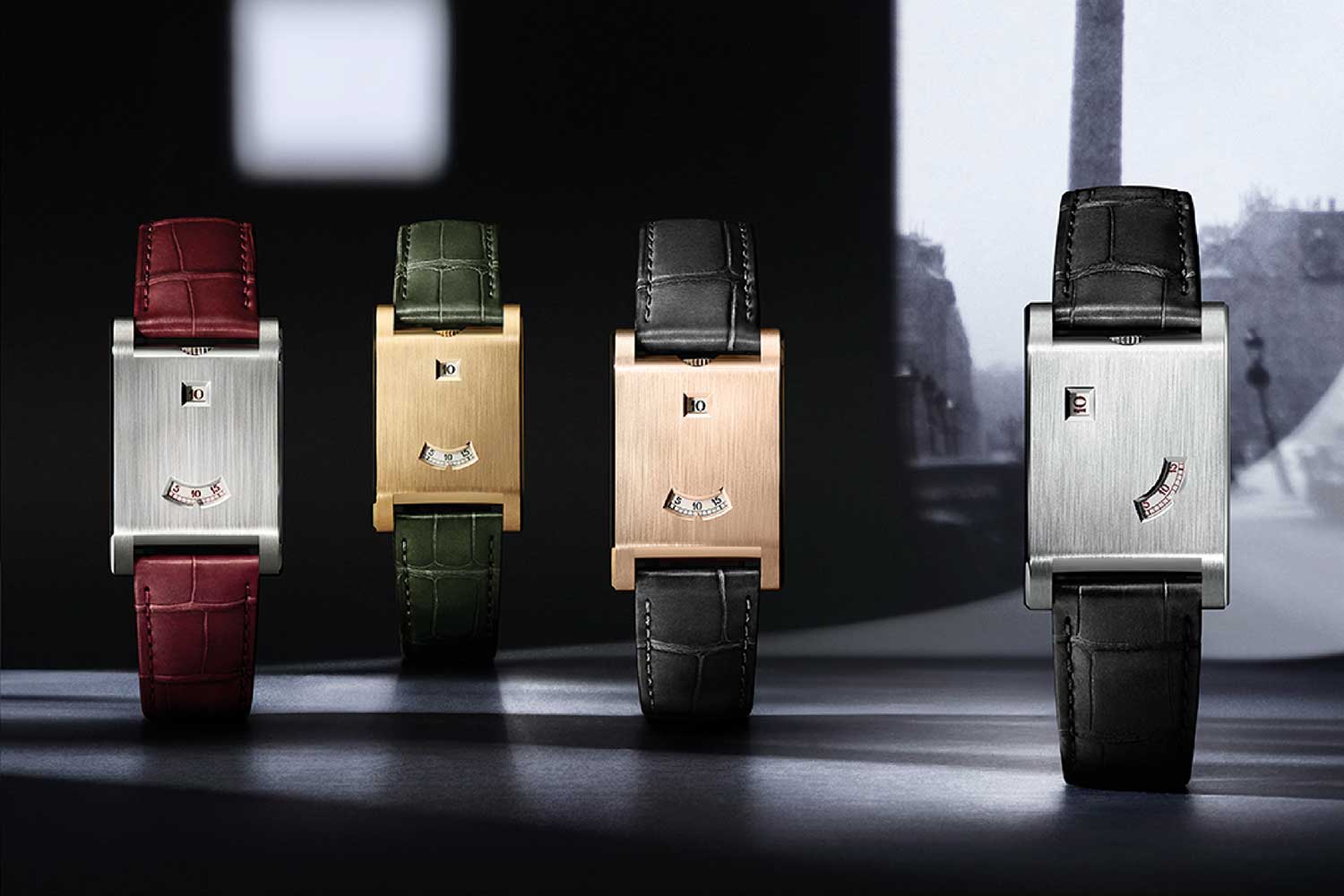
The 2025 collection explores this architecture in four editions, split across two dial layouts. The first three show hours in a square aperture at 12, minutes in a curved window at six, just as they were on the first Tank à Guichets. Collectors can acquire this configuration in yellow gold on a dark green alligator strap, with matching green numerals on the discs; in rose gold with grey numerals and a charcoal strap; or in platinum, whose brushed coolness is offset by burgundy printing and a rich red strap. In each case, the colour is echoed in the typography and leather; single-colour metal enhanced by a careful colour pairing.
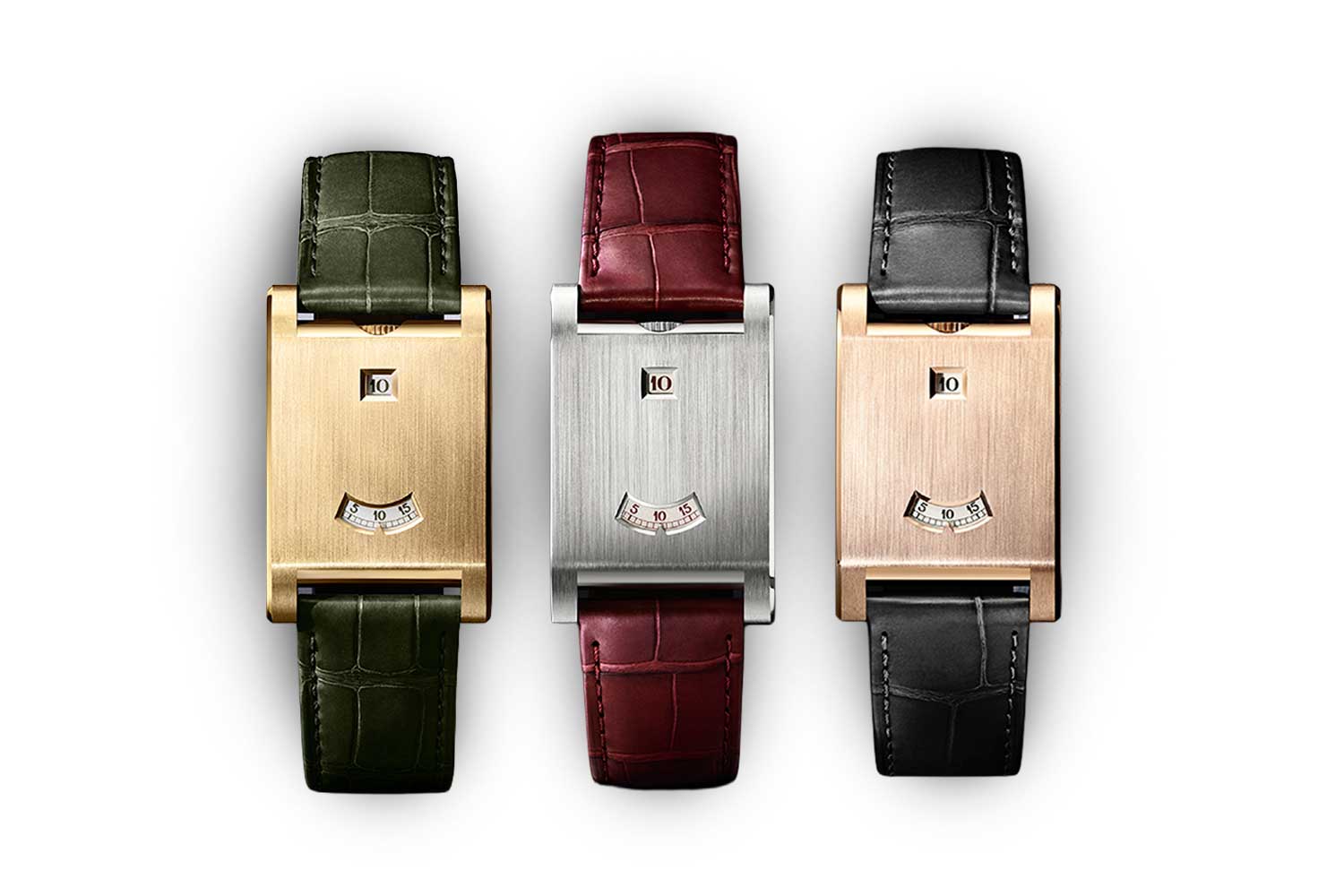
The first three show hours in a square aperture at 12, minutes in a curved window at six, just as they were on the first Tank à Guichets
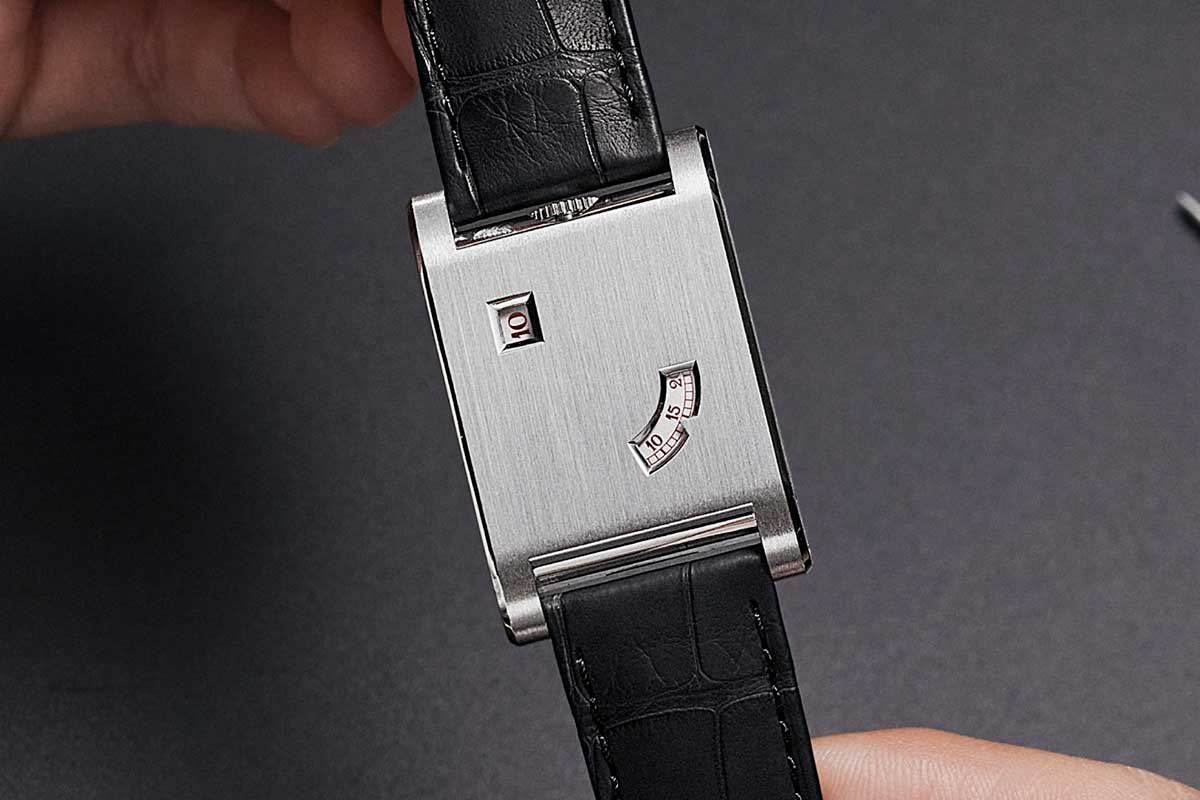
The fourth reference is where Cartier allows itself a little mischief. In this limited, numbered platinum edition of 200 pieces, the apertures are rotated off axis: the hour at roughly ten o’clock, the minutes at four. It is a nod to some of the more experimental guichet layouts the maison produced in the 1930s, a decade when case makers and dial designers allowed themselves to bend the rules of symmetry. Seen on the wrist, this skewed geometry has an almost cinematic quality, like a still from a German Expressionist film — familiar proportions, but viewed through a slightly disorienting lens. It is also, in collector terms, the one that will be hardest to resist: a low-run, platinum oddball within an already niche family.
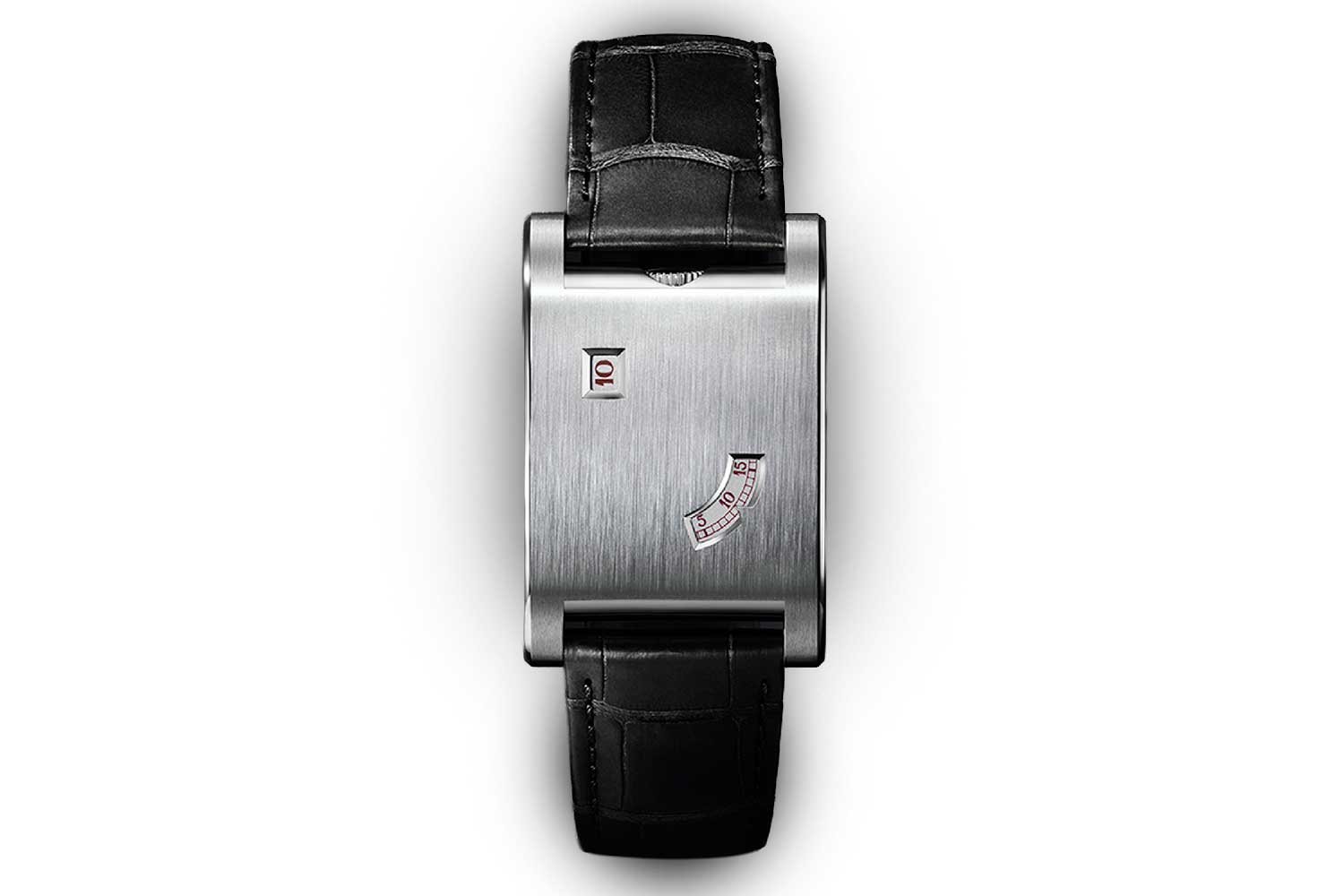
The fourth reference is where Cartier allows itself a little mischief, the apertures are rotated off axis: the hour at roughly ten o’clock, the minutes at four
If all this sounds quite conceptual, the reality is that the new Tank à Guichets is really wearable. The dimensions are compact by modern standards, and the slim profile means it slides under a cuff with barely a ripple. On the wrist, it feels dense but not ostentatious. The brushed case front keeps reflections to a soft glow, so what you notice is not bling but the rectangular form and the way the flanks of metal run from strap to strap, as well as the precise framing of the two apertures and of course that impeccable, brushed finish.
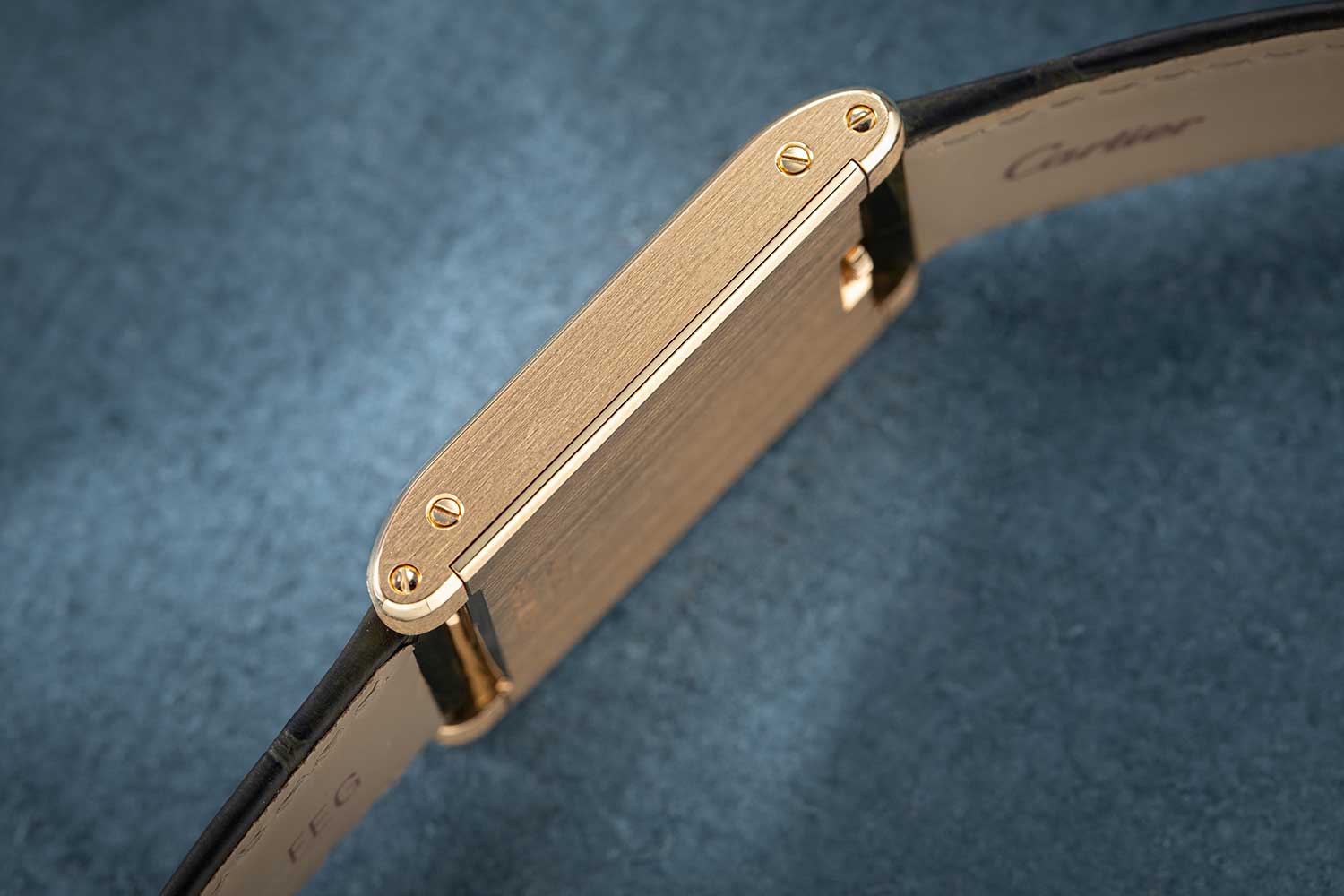
The 2025 Tank à Guichets house the manual-winding 9755 MC in a case measuring 6mm thick (©Revolution)
One of the eternal strengths of digital displays, whether mechanical or quartz, is they eliminate interpretation. You are not estimating the angle of hands; you are reading numerals. Here, the contrast between the metal and the coloured discs means that a glance is all you need. It is, in an odd way, one of the most practical dress watches Cartier makes.
Cartier Privé Tank à Guichets
Placing the Tank à Guichets in the broader story of Cartier Privé is instructive. The collection exists in a direct line from the much-loved Collection Privée Cartier Paris of the late 1990s and early 2000s, which reissued icons like the Tortue, Tank Asymétrique, and Tank à Vis with top-tier movements and obsessive attention to historic detail. Where CPCP was about reminding the world that Cartier could play at the highest levels of Swiss watchmaking, Privé has become a yearly meditation on shape and proportion, each opus revisiting a single “mother idea” as Louis Cartier called these foundational model designs: Cintrée, Chinoise, Normale, Asymétrique, Tortue – revistied and reimagined through the lens of contemporary craft.
In that company, the Tank à Guichets is both an outlier and a perfect fit. It is one of the very few Tanks defined not by its case silhouette but by its display, an early example of Cartier thinking not just about how a watch looks, but how it communicates.
Culturally, the watch could not be landing at a better moment. Shaped watches are having a broader fashion moment; the Tank, Crash, Pebble, and their peers have become shorthand for discerning taste in everything from red-carpet reports to fashion lists of 2025 watch trends. When a modern style figure like Jacob Elordi turns up to a film premiere wearing a green-strapped vintage Tank à Guichets it reinforces the idea that this is not just a historical curiosity but a searingly current design.
Cartier Privé Tank à Guichets
From a collecting standpoint, the proposition is ultra-luxe. All four references are precious-metal only. The production numbers, especially on the skew-window platinum, are microscopic in the context of global demand. The movement is a dedicated calibre. Previous modern Tank à Guichets runs from 1997 and 2005 have effectively disappeared into long-term collections, surfacing rarely and expensively. It does not take a market analyst to connect the dots: if you want one, you will need to move quickly, and you will almost certainly be outnumbered.
Cartier Privé Tank à Guichets
And yet part of the Tank à Guichets’ charm is how unbothered it seems by all that hype. It does not shout on social media and it feels like a watch for people who enjoy the private knowledge that the solid rectangle of metal on their wrist is in fact a finely tuned mechanical instrument, thinking in jumps and arcs beneath the surface. 2025’s Cartier Privé Tank à Guichets is a reminder that simplicity and complexity can coexist. Take away the dial, hands, and you are left with windows, a facade of metal, and the beat of a calibre built for that specific watch. Nearly a century after its debut, the Tank with windows is still looking straight down the line of modernity and if you are lucky enough to secure one of these new editions, you will not just be buying a watch, but your own window into watchmaking heritage.
Cartier

You may also like
Editorial
Revolution Awards 2025: Best Jewelry Watch — Cartier Panthère de Cartier
Jan 27, 2026
Editorial
Revolution Awards 2025: Best Jewelry Watch — Cartier Panthère de Cartier
Jan 27, 2026
Editorial
Cartier’s Beautiful Baignoire
Jan 15, 2026
Editorial
Cartier’s Beautiful Baignoire
Jan 15, 2026
Editorial
Cartier Makes The Case for Titanium
Jan 7, 2026
Editorial
Cartier Makes The Case for Titanium
Jan 7, 2026